Showing posts with label far-right fun. Show all posts

Monday, April 22, 2013

Has Christopher Monckton ever won a lawsuit?

My lawsuit was much better than "Cats." I'm going to file them again and again.

Christopher Monckton is an ignorant, incompetent, dishonest, delusional mess of a gibbering idiot. I've reported on this fact for years and I have yet to hear from any lawyers, which is why I was skeptical that the Nova-Monckton account of him repeatedly crushing his enemies in lawsuits was anything other than a slop bucket of narcissistic lies(*).

First claim: Monckton sued the British government over using An Inconvenient Truth in schools, and won.
We have had some good court victories. In 2007 the London High Court condemned Al Gore’s mawkish sci-fi comedy-horror movie. It found nine errors so serious that the court ordered 77 pages of corrective guidance to be circulated to every school in England. The judge said: “The Armageddon scenario that he [Gore] depicts is not based on any scientific view.”
Two days later, Gore won the Nobel Mickey Mouse Prize. But he was holed below the waterline. Now he is seen not as a prophet but as a profiteer.
The whingers of the do-nothing brigade were at work even then. The lawyers refused to file the case on the ground that there was no chance of success. They were fired.
The new lawyers said we could not possibly win on the science and refused to use any scientific testimony. The judge threw the case out. I recovered the position by instructing the lawyers to write to the judge asking if he had even seen Gore’s movie before he had reached his judgment without holding a hearing.
Tellingly, the judge did not reply. I insisted on – and got – a new judge. This time the lawyers did what they were told. I wrote 80 pages of scientific testimony. Bob Carter and Dick Lindzen– bless them both – worked from the document in crafting their evidence, and signed off as expert witnesses. As soon as the other side saw it, they collapsed and settled, paying the plaintiff $400,000.
Reality: Monckton wasn't one of the litigants in that suit, which the deniers lost. The quote from the judge, which I've bolded above, is a fabrication -- a total fiction (for a comparison with what the judge actually said, see this outstanding analysis, beginning at the two-minute mark.)

He claims to have asked one of his friends to fund Stewart Dimmock, who actually sued. Dimmock has been asked who helped fund his suit, at refused to name anyone, calling it "a private matter." Many sources, understandably, report this as fact, because who would lie about participating in a failed lawsuit? But the reality is that Monckton lies constantly, habitually, and always by way of growing the legend of Monckton.

The case, Dimmock v Secretary of State for Education and Skills, wasn't settled, and Dimmock didn't get a payment of $400,000. He did, as is routine in British legal battles, win a payment for a portion of his legal costs, leaving him 60,000 pounds poorer.

His stated objective in the lawsuit was for An Inconvenient Truth not to be shown in schools any more. The judge rejected that request.

Monckton claims to have been involved in funding this failed lawsuit, but as far as I know, no one actually involved in it has confirmed that, placing his role in the same category as his claimed discovery of the cure for AIDS.

The second win claimed by Monckton has already been exposed as another fantasy: he claimed that Mann had settled a lawsuit with Tim Ball for a million dollars. Whoops! Pure fiction, and Jo Nova was troubled to print a correction.

Monckton also trumpets a huge, simply huge, victory against the dasterdly BBC:
I sued the BBC a couple of years ago when they did a hatchet job on me. I had been told – in writing – that I should have the chance to alter any points that were inaccurate. Fat chance.
So I lodged a High Court application for an injunction. The BBC’s first reaction was to deny that the director-general’s office had received my letter. Not having been born yesterday, I had delivered the letter myself and had insisted that the director-general’s personal assistant should sign for it.
I insisted on seeing the programme before it was broadcast. It was a disgrace. I wrote to the Director-General listing two dozen factual errors and numerous other biases in the schlocumentary. No reply.
So I lodged a High Court application for an injunction. The BBC’s first reaction was to deny that the director-general’s office had received my letter. Not having been born yesterday, I had delivered the letter myself and had insisted that the director-general’s personal assistant should sign for it.
The BBC crumbled and cut the programme from 90 minutes to an hour, taking out the overwhelming majority of the vicious nonsense. There were still some objectionable points, so I went into court.
I fought the case myself. When I introduced the two barristers and three solicitors for the Beeb, the judge interrupted me and said: “Lord Monckton, I fear I must draw your attention to a potential conflict of interest. You see, I am a member of your club.”
I had no objection and invited the BBC’s expensive QC to give his opinion. He had no objection either, but added: “Er, I too have a conflict of interest. I also am a member of Lord Monckton’s club.”
The judge did not prevent the Beeb from leaving a few barbs in my side. The BBC issued a lying statement that I had lost. But the judge held that I had “substantially won” the action. A 90-minute programme had become 60 minutes. The Beeb had lost. Big-time.

He lost, of course. Really this story gets to the heart of why Monckton is such a memorable liar. It's full of specific details -- about the club, and the judge, and the director-general's personal assistant. Yet nothing that can be easily checked, nothing that can be readily verified. It's full of numbers -- two dozen errors, 90 minutes to an hour, two barristers and three solicitors, etc. And it has a simple story of Monckton prevailing against odds. Really the only weakness of the story, as is typical of Monckton, is that he cannot control his own narcissism long enough to sell the story. Monckton is always the least believable part of a Monckton anecdote. He demands! He sues! He belongs to a fancy club! He takes on an army of lawyers and wins!

Monckton has surely mastered the Big Lie(**), as his fictional legal career illustrates.

Monckton has also threatened legal action against George Monbiot after an article dissecting Monckton's dishonest hackery. (He claimed it was "libellous of me in my calling.") But no lawsuit ever emerged. He promised to have John Abraham brought up on charges of academic misconduct; he didn't. He made the same threat about Dr. Barry Bickmore: again, no follow-through.

So here is my question of the day: Has Monckton ever actually followed through on his profuse threats, undertaken legal action against a critic, and won a judgement against them? Or are his repeated claims to have done so -- claims that have now progressed to advocating specious lawsuits against critics as a strategy, since it's worked so well for him -- simply another of his narcissistic fantasies?

See also:

Skeptical Science's Monckton Myths.

Barry Bickmore's Lord Monckton's Rap Sheet.

Abraham debunks Monckton (1/6)

Monckton Bunkum (Parts 1-5):


--------------------------
*That, and of course the fact that their mouths were moving.

** The Big Lie is a propaganda technique described by Hitler in Mein Kampf:
All this was inspired by the principle--which is quite true within itself--that in the big lie there is always a certain force of credibility; because the broad masses of a nation are always more easily corrupted in the deeper strata of their emotional nature than consciously or voluntarily; and thus in the primitive simplicity of their minds they more readily fall victims to the big lie than the small lie, since they themselves often tell small lies in little matters but would be ashamed to resort to large-scale falsehoods. It would never come into their heads to fabricate colossal untruths, and they would not believe that others could have the impudence to distort the truth so infamously. Even though the facts which prove this to be so may be brought clearly to their minds, they will still doubt and waver and will continue to think that there may be some other explanation. For the grossly impudent lie always leaves traces behind it, even after it has been nailed down, a fact which is known to all expert liars in this world and to all who conspire together in the art of lying.
Monckton, exceptionally, explicitly admits to hiding behind this cognitive glitch:
Abraham’s approach is novel. He’s saying not that I got one thing wrong but that I got just about everything wrong. And how plausible is that?

Sunday, September 30, 2012

Hoarders, Republican edition

Given recent discussions of predilection for conspiracist ideation in climate deniers, I enjoyed the ad Redstate is offering me right now:

Seriously:

Apparently no one told them technology and the free market will grant us the magical power of instant adaptation to food shortages.

The brain of a right-winger is a scary place these days. I don't know why. Tax rates are at a sixty-year low. Restrictions on abortion and barriers to family planning are multiplying like forest mushrooms after rain. We have a president who, except for his skin color, could easily pass for an Eisenhower Republican. Yet, in spite of all that, paranoia reigns.

Maybe it's like the obesity epidemic. Fat, sugar, and leisure have always been an easy sell, because our genetic program responses powerfully to those inducements. Combined with wealth and modern marketing, the result is overconsumption and ill health.

Similarly, the brain responds powerfully to fear. Politicians and propagandists (as well as the aforementioned marketers) have long understood this, and they sell fear like Nabisco sells cookies. It's nothing new. But perhaps the development of extensive electronic ecosystems dedicated to the far right have shifted this dynamic. Now for the first time, the audience can instantly respond to the material, enabling them to feed on one another's anger and fear.

It's now painfully evident that most people subject to the relentless marketing of easy calories and labor-eliminating conveniences will consume them until they're sick with them, and beyond. Industries with no thought except to sell their hamburgers, cookies, PopTarts and sundry are contributing to a process that is killing off their customers. In ten or twenty years, we may look back on this unhealthy diet of fear the Right feeds its customers and recognize the same process unfolding; for recognition, power, and money they have sickened their customers by the excess consumption of fear, to their detriment and the detriment of our democracy.


Friday, September 28, 2012

Poll denialism


Source

People are starting to make some connections:
One of the odder little subplots of the 2012 election has been the growth of poll denialism among Republicans. As Mitt Romney's chances have grown ever dimmer, a cottage industry has sprung up on the right claiming that presidential polls suffer from liberal bias and Romney is really doing better than they say. "When the published poll shows Obama ahead by, say, 48-45," explains conservative pundit Dick Morris, "he's really probably losing by 52-48!"

Now, this is hardly in the same league as climate denialism or evolution denialism.
Or vaccine denialism or rape denialism or . . . well, you get the idea. Here in America, one of our major parties has responded to the revolution in personal communication that began with 24 hour cable news and progressed to smartphones and the blogosphere by developing an independent, self-reinforcing, weather-dominator-scale doomsday device of cognitive dissonance.

There is no unpleasant reality, the right has discovered, that cannot be shouted down by 128-bit quad-core sophistry. The latest fact to be dragged, gagged and bound, towards the conservative memory hole is Romney's dismal prospects in the upcoming elections:
congressworksforus posted a comment in On Polls and Polling · 2 days ago
I can guarantee you that the Romney campaign has access to far better polling than any polling organization that's posting public polls.
The fact they are NOT changing course simply tells me that Erick is wrong, and that the public polls are horrible this time around.
The fact that Obama has (if you pay attention) essentially given up on being re-elected (could he possibly make any more mistakes than he has the past couple of weeks) tells me that his campaign knows it is toast as well.
Turnout will favor Republicans. The GOP built a ground game after 2008 that was effective (but not overwhelmingly) in 2010, but was *incredibly* effective a few months ago in Scott Walker's recall election (he got more votes than when we was first elected!)
Believe me, Obama is not winning Ohio, nor is he winning Florida, and without either, he ain't winning. 
Yep, we'll just take your word for it, anonymous Restate commenter. Poll denialism is rich with the sort of useful idiots who feel that good old horse sense and five minutes on WUWT qualifies them to dismiss radiative physics. Chait's take here: 
This was the week that the political world discovered the burgeoning world of conservative polling denial. Just like other, better-established fields of conservative reality denial, the polling denial movement has its own levels of insanity. At the core sit the most fanatical of the denialists, like unskewedpolls.com, a popular site that offers its own twist on public opinion data, which currently has Mitt Romney leading Barack Obama by 7.8 percent nationally.
The poll denialists’ argument holds that the polls — all of them, except Rasmussen, conducted by a right-wing pundit with a terrible record of accuracy — are over-sampling Democrats, finding nearly as many of them as showed up at the polls in 2008, which they consider a high-water mark for Democrats unlikely to be repeated. Pundits have patiently explained that polls do not make assumptions about the party identification of voters but merely report what voters tell them. And the most plausible explanation for the higher number of Democrats in polls is that increasing numbers of conservatives who reliably vote Republican are identifying themselves as independents to pollsters.
So poll denialism is silly, and the conspiratorial explanation undergirding it is deranged.
Steven Taylor is on the same page:
I am astonished at the degree to which many who are rooting for Romney seem to be in total denial about the polling.  For example, the following from Katrina Trinko at NRO:
But regardless of partisan breakdown, Republicans should be wary of taking any polls as completely accurate.
“Part of the reason the Democrats won in 2008 was that when it looked as if McCain was going to lose, some Republicans stayed home,” argues McLaughlin. “So if President Obama is in a dead-even race with Mitt Romney in so many swing states, if the Democrats can convince enough Republicans they’re going to lose, it could take a one-point loss for the Democrats to a one-point win.”
Emphasis mine.
The thing that is remarkable about the above is that it not only in based in an approach that privileges preference over reality, it comes with a built-in fairy tale to explain any non-preferred results!  Using the logic above the polling can be wrong whilst predicting the actual outcome and, better yet, the wrong polling (that was actually right) wasn’t just wrong, but it caused the wrong outcome to occur!
Life would be better for all of us if we were all, regardless of partisan preferences, a tad more grounded in empirics.
Can I just say I wish the pundits and national media types would be as quick and forthright in confronting climate science denial? But of course, the difference is that most reporters don't understand climate science, while the concept of calling people up and asking them who they are going to vote for is a little easier to wrap your mind around. And again, as we saw with Todd Akin's comments, the immediate and obvious connection between the ideological worldview to the facts being denied helps people see deniers for what they are. The polls are brutally discouraging to my candidate = I deny the polls; the most scrupulous practitioner of journalistic false balance has got to be able to connect the dots on that one.


Thursday, August 30, 2012

Fighting climate denial: the Akin line

Source


Pity Todd Akin. It must seem to him as if the world makes no sense.

One minute he is living the life of a normal House Republican gunning for a vulnerable Senate seat, and the next he's a virtual pariah, with most of his own supporters saying he should drop out of the race. And all for making a comment not substantially different than those he and his colleagues make every day. Here is the line that turned his own party against him:
Well you know, people always want to try to make that as one of those things, well how do you, how do you slice this particularly tough sort of ethical question. First of all, from what I understand from doctors, that’s really rare. If it’s a legitimate rape, the female body has ways to try to shut that whole thing down.
Instant pandemonium. But why should that be so? What did Akin actually do?

It's a five-step process:

1. You have a rigid ideology that is absolutely opposed to a given action (like abortion).
2. There are empirical facts that make your absolutist position untenable (sometimes women are pregnant not because they chose to be, but because they were raped.)
3. Find a crackpot scientist (one sharing your ideological idiosyncrasies) who will explain away the inconveint fact (Women who have really been raped don't get pregnant!)
4. Ignore the vast scientific evidence to the contrary.
5. Promote the conspiracy theory as scientific fact.

Why did Akin think he was going to get away with this sophistry? Because he and his party have been playing this game, routinely and increasingly blatantly, for years. How would he know that all of a sudden ignoring the scientific consensus and promoting pseudoscience would blow up in his face? Compare his remarks on climate change
AKIN: This whole thing strikes me if it weren’t so serious as being a comedy you know. I mean, we just went from winter to spring. In Missouri when we go from winter to spring, that’s a good climate change. I don’t want to stop that climate change you know. Who in the world want to put politicians in charge of the weather anyways? What a dumb idea….
Some of the models said that we’re going to have surf at the front steps of the Capitol pretty soon. I was really looking forward to that….
 His official website trots out some more old canards (h/t Grist):
Although some of the physics and meteorology surrounding climate is well understood, the question of predicting future climate trends as well as man’s ability to definitively influence them is still an active field of scientific research. Moreover, despite our desire for complete certainty, we must understand that global climate is very complex phenomena. No one variable can be taken as the sole driver of climate and there exist cycles within cycles of meteorological variability. Scientists state that the planet has gone through many natural heating and cooling cycles over the last thousand years.
While scientists understand that increased levels of CO2 and other greenhouse gases work to trap heat, those gases are not the only variables when it comes to Earth’s temperature trends. For example, the sun itself has variable output, which affects temperature cycles. Currently, scientists are somewhat puzzled by a current-extended minimum in solar activity. Such a long-term lack of solar output in the early 18th century, referred to as the Maunder Minimum, is thought to have contributed to the last mini-ice age. Of course, factors such as solar variability — that could cause a mini-ice age — would probably not afford a man-made solution.
So here's the real question: why does the one public endorsement of pseudoscience spark outrage, while the other gets ignored? What's the difference? Where is the "Akin line" that separates comments like Michele Bachmann's, blaming the HPV vaccine for mental retardation, with these, from Akin's colleagues:
The committee’s chair, Ralph Hall (R-Texas), lumps “global freezing” together with global warming, which he doesn’t believe humans can significantly impact because “I don’t think we can control what God controls.” Dana Rohrbacher (R-CA) thinks cutting down trees reduces levels of greenhouse gases they absorb. Mo Brooks (R-Alabama) still trots out the debunked notion that a scientific consensus existed in the 1970s on “global cooling,” which he portrays as a scare concocted by scientists “in order to generate funds for their pet projects.”

Dan Benishek (R-Michigan) strikes that climate-scientists-as-charlatans note, dismissing contemporary research as “all baloney. I think it’s just some scheme.” Paul Broun (R-Georgia) says that “Scientists all over this world say that the idea of human-induced global climate change is one of the greatest hoaxes perpetrated out of the scientific community.”
Watching the Deniers asks: How would you counter the denial movement? And I think the answer is very simple; we need to bring them across the Akin line. We need to gently and truthfully shape the public debate such that outrageous comments provoke outrage, that laughable ignorance provokes laughter, until we reach a point that those that advocate science denial get shunned by their own political allies as liabilities in the battle for electoral success.

So why did Akin and Bachmann instantly provoke national scorn, while Benishek and Broun have not?

A) In each case, there was a simple, testable scientific assertion. Vaccine = mental retardation. Rape = no pregnancy. It's easier to see why that more easily trips up a science denier as compared to "It's all very complicated" or "Climate models are unreliable."

B) The puppet strings are short and colorful -- there is no problem at all reading the minds of Akin and Bachmann and understanding why they are making stuff up. Akin wants abortion to be completely illegal, always, in all circumstances. That women get pregnant from rape is an awkward fact for him, so he tries to suppress it by invoking pseudoscience. Bachmann is against the HPV vaccine because it makes sex a little less dangerous for women, and in her mind, that encourages promiscuity.

In both cases the lies play into the speakers' established positions in culture wars that have been raging for a generation. Even the most low-information voter knows how conservative Republicans feel about abortion and safe sex. That makes it easy to connect the dots.

C) There is a clear scientific consensus, and the audience knows that, even if they don't know the details. Physicians and medical science have a much stronger presence in American life than does climate science or climate scientists. Most people know a physician personally. The science denial wing of the Republican party has not constructed a campaign to slander and defame physicians, attacking them as frauds or incompetent or self-interested rent-seekers. They would not find it easy to do if they tried. But in the absence of such preparation, voters have little reason to reject the scientific consensus. The total rejection by the medical community of these lies ends the debate.

D) These comments were deeply insensitive and hurtful to other Americans. Rape victims were insulted by Akin. People with actual learning disabilities or cognitive limitations and the families that care for them were insulted by Bachmann. This brought anger and contempt into the response to the speakers as well as mockery.

If we go back to the statements by Akin and friends on climate change, it's clear they are missing most of the attributes listed above. Take "Scientists state that the planet has gone through many natural heating and cooling cycles over the last thousand years." It's vague, not clear and testable (A). If you strongly connect Akin to fossil fuel interests, it could be said to meet (B). The public does not have a clear idea of the scientific consensus that the current global warming is orders of magnitude different from natural climate variations of the recent past (C). Those that do know this have also been exposed to a relentless campaign to undermine the scientific consensus by slandering the scientists themselves (C). The comment is deeply offensive to people who understand what Akin is trying to accomplish and what the actual state of affairs is, but they do not have the visceral offensiveness of someone blaming rape victims or the parents of the mentally retarded for their situation (D).

So, if we think Akin's pseudoscience about climate change deserves the same contempt as his pseudoscience about rape and pregnancy, how can we encourage the public to see things similarly?

A) In each case, there was a simple, testable scientific assertion. Focus on deniers' assertions about science. Don't let them get away with vague statements of doubt, and endless one-sided interrogations of others. Encourage them to explicitly state their beliefs.

B) The puppet strings are short and colorful -- there is no problem at all reading the minds of Akin and Bachmann and understanding why they are making stuff up. Highlight the connection between right-wing extremism and climate denial. Make the connection between science denial and other right-wing views. As entertaining as it is to show how climate denial relates to the conspiracy-theory-prone mindset, the critical driver of climate denial in politics is the broader radicalization of the Republican Party.

C) There is a clear scientific consensus, and the audience knows that, even if they don't know the details. The contempt of hardcore climate deniers for the concept of scientific consensus is born of fear. Despite deniers' whining and jeering and embrace of the Galileo gambit, the public knows very well that the consensus of the vast majority of scientists on a given issue is as close to the truth as anything we can lay hands on. And survey after survey shows that even "alarmists" vastly understate the strength of the scientific consensus on global warming -- the meaning the fact of the scientific consensus has not been "priced in" by the public.

So, while sticking to the stuff we clearly know to be true, and not venturing into unsupported speculation, it's important to highlight the contrast: Consensus vs. crackpots on the fringe.  Consensus vs. crackpots on the fringe. Consensus vs. crackpots on the fringe.

D) These comments were deeply insensitive and hurtful to other Americans. This one is hard -- I don't know it is achievable in the short term. It's difficult to "put a face" on global warming. But perhaps, as with "consensus," the deniers are giving us a hint, by vehemently attacking the arguments they most fear. And what is the single most jeered-at, eye-rolling, cliched picture in all of climate change? You know what it is. It's this:

Deniers jeer at what works.
When the deniers deny, they are insulting those that have already been hurt by climate change. They are insulting the other creatures we share the planet with. We have to make those people -- Inuits whose villages are being washed out to sea, elderly people without air conditioning dying in record-breaking heat waves, children in temperate climates suffering with tropical diseases previously unknown there -- we need to make them as real, as familiar, as indisputably linked with AGW as that bear on his shrinking ice floe. 

Compare the argument over gays in the military. While they were theoretical, people could say (and did) all sorts of ignorant and hurtful things, with little political fallout. But as the culture gradually changed, as gay service members dared to speak out more, as the ban was finally ended, gays in the military stopped being theoretical people, and they became actual, flesh-and-blood people with their lives on the line for their country. And suddenly as a social conservative you had to be very careful what you said. This social changed went very slowly, until it reached that critical point where it was hard to attack "gays in the military" as an abstraction without insulting the actual people you were talking about. Then the culture and the discussion changed more in six month than it had in the previous sixty years. And where is that debate today? Gone and virtually forgotten.

Even cuter than polar bears.
I've written about confronting climate denial before, and as before, I find a reasonable approximation of my views is to take all the well-meaning advice of the self-identified "moderates" in the climate debate, the Kloors and the Revkins and so forth, and do the exact opposite of what they recommend.

Don't be a free educational resource to people with no actual sincere desire to learn. Ask them questions -- be skeptical about their skepticism -- put their beliefs and opinions on the record and under the microscope.

Don't waste your time searching for a mythical middle ground. Climate deniers are in this in order to have an ideological battle. It is part of their war with modern life and Western civilization. You will not win them to your way of thinking with a clever compromise, any more than the NRA is going to wake up one morning at say "Wow, we've got all the pro-gun legislation we could ever need! Now, back to regional shooting competitions!" Instead, embrace the polarization of the debate -- among other things, this helps the public understand what motives climate deniers to lie and distort.

Don't try and convey uncertainty. If you have a complex message while your opponents have a simple one you will lose. Plain and simple. Deniers want us to spending our time trying to educate the public to grasp complex scientific ideas. They are delighted when they can provoke us into doing that by accusing us of oversimplifying the story. (They will just be at this little table over here on the other side of the room, saying FRAUD LIES FRAUD TAXES SOCIALISTS GREEDY SCIENTISTS NATURAL NATURE FRAUD FRAUD.)

So find a simple message, well inside the borders of the consensus, and hammer it home relentlessly. Show the people being hurt by global warming. Show them over and over again, until the public gets a visceral sense that deniers are denying not just the scientific understanding of where the climate is going, but of what is happening in the world right now. People are dying while the right-wing fringe lies and defames. When the public understands that -- understands it in their bones -- deniers will find themselves across the Akin line.

Thursday, June 28, 2012

Idiot comment of the day: Godwin FAIL

From a Redstate rant on the horrors of the Rio conference:

 food for thought - AGW is all bad all the time

bobmark Monday, June 25th at 2:47AM EDT (link)
I know the bulk of the folks on this site are lawyerly inclined, but for we scientifical types, this stuff is red meat.
Good sources of retorts to the climate change / sustainable development / rggi foolishness.
http://www.americanthinker.com/2012/01/green_lebensraum_the_nazi_roots_of_sustainable_development.html
http://joannenova.com.au/2012/06/nature-and-that-problem-of-defining-homo-sapiens-denier-is-it-english-or-newspeak/
http://chiefio.wordpress.com/2012/06/21/response-to-paul-bain/
Is he being deliberately ironic in calling himself "scientifical" and then linking to "the Nazi roots of sustainable development"? We may never know.

You're all NAZIS!
It seems more and more frequently ignorant right-wingers assert their "scientific" chops, not in the expectation that anyone will believe them, but as a way of illustrating how little facts and reason matter to them generally.

Tuesday, March 6, 2012

Republicans against free-market wind power

Teh horror
They're getting scared:

Like many states, Wisconsin has a patchwork of differing local setback rules governing the distance wind developers need to leave between turbines and adjacent homes. To streamline the process, the Wisconsin legislature passed the 2009 Wind Siting Law instructing the Public Service Commission (PSC) to create one overarching state siting law for all wind turbines subject to local review. . . . 

In response, Republican representatives and ALEC members proposed their own legislation to make implementation of larger wind projects much more difficult and protracted.

In October 2011, State Senator Frank Lasee (R) introduced a bill (SB 263) that would declare a moratorium on construction of wind farms over 100 feet, saying larger turbines should not be allowed until the state PSC was in possession of a report that ensures turbines do not cause health problems.
That's not how the conventional wisdom would have it, is it? Supposedly the pro-business conservatives are fighting for profits and against regulations, while the environmentalists are tying up new energy projects in red tape.

Supposedly renewable energy is impractical and expensive, and all that's necessary to ensure its demise is not to subsidize it and not to charge fossil fuel burners the cost that their soot and sulfates and NO2 and CO2 impose on society. Privatized profits and socialized harms -- but still, non-intervention is supposed to be their guiding principle.

Wind is already price-competitive in places where the wind blows hard


Obviously these measures are no longer sufficient. Contrawise conservatives feel sufficiently threatened by the appeal of renewable energy on the open market to strive to strangle it with overregulation. I call that a good sign.

Judith Curry needs living space!

There's a whole series of these posters. They're pretty great.

I kid, she didn't reference that awful rhetorical precedent, but pretty darn close:

With regards to K-12 education, there is no particular reason to teach ‘climate change’ in the K-12 curriculum.  Climate change is a topic that is more suitable high school ‘science and society’ courses.  In such courses, teaching the controversy would seem to be of paramount importance.
"Teaching the controversy" being of course the rallying cry of the Creationists' drive to forbid the teaching of evolution. What a tradition for a professor of atmospheric science to allude to!

Somebody missed the sarcasm here.
I was interested in how far this particular meme had spread, so here you go:

"Teaching the controversy" "evolution": 38,700,000 hits
"Teach the controversy" & "evolution": 229,000 hits.
"Teaching the controversy" "global warming": 42,900 hits.
"Teach the controversy" & "global warming": 62,000 hits.
"Teaching the controversy" "climate change": 32,700 hits. 
"Teach the controversy" & "climate change": 62,100 hits.

I found some hits for other examples of science denial -- "moon landing" and "vaccines" as well as "Holocaust" -- but they seem to be primarily by people criticizing the denial by comparing their arguments to the anti-evolution malarkey. Only the climate denial crowd, as far as I can tell, is seriously trying to adopt this anti-evolution meme as their own.

As a tactic, this seems . . . not inspired. The denial of evolution, as an analogy for the denial of anthropogenic climate change, is perhaps a little too close for comfort in ways that are not flattering to Curry et al:

Denial of Evolution vs Denial of Global Warming

1. Flies in the face of a massive amount of scientific evidence. Check. Check.
2. Utterly rejected by the vast majority of scientists. Check. Check.
3. Driven by the discomfort of a particular ideology with the implications of the science. Check. Check.
4. In lieu of a compelling alternative hypothesis, portrays the uncertainties and persistent unknowns that attend all science as huge, gaping flaws that falsify the science. Check. Check.
5. Unable to come to terms with the vast body of mutually supporting evidence from multiple fields, employ a fallacy of synecdoche: whatever point, major or minor, that they are critiquing at the moment, is treated as the cornerstone of the theory without which the whole corrupt edifice comes tumbling down. Check. Check.

I could go on, pointing out their mutual love for unreliable online lists of supposedly supportive supposed scientists (see here and here) and their common dependence on short memories and highly mobile goalposts. But you get the point. This is not a flattering comparison for either side.


The reason it is not flattering is really simple: this is a method. It is not spontaneous. It is a battle-tested set of strategies and tactics for attacking science and scientists and confusing the public. For it to work, it can't look like a method; it's supposed to be just a purer, better execution of the scientific method. That lie is hard to sell over and over again, especially when the people who pioneered these tactics have long been outed as an arm of the Christian right.

There's a reason magicians don't do the same trick for the same audience over and over again; there's a reason those Nigerian bankers always include a soonish deadline. Time for the mark to think and reflect is deadly to a con artist, who relies on distraction. Distance and perspective are the enemy of the demagogue, who relies on the emotional engagement of the audience. For all these people, showing their tactics to be at work in another cause, showing the same tired arguments and rhetorical fallacies deployed against another compelling scientific theory, is a terrible, terrible move.

Judith Curry is a scientist. She believes in the theory of evolution. There must be a part of her that understands what advocating "teaching the controversy" implies about the position she's taken and the people she's allied herself with. Is this a cry for help?


Sunday, January 8, 2012

Whatever happened to that "Atlas Shrugged" movie?

It flopped:

Those that think money is the measure of all things will be interested to note that Rand lost her backers $15 million.

How could it all have gone so wrong? The hard right had already popped its champane corks, based on a fair but unspectacular opening:
CHICAGO, April 29, 2011 — By current Hollywood standards, it is a movie that should never have been made. Imagine this story pitch to progressive movie execs: "we have a female heroine, genius entrepreneurs disappearing, and a government conspiring to control its people and their creations. In short, a powerfully persuasive anti-government message."
Not exactly “Iron Man 3” is it?
Yet, despite (or because of) Hollywood’s best efforts to keep the movie down, “Atlas” is racking up dollar signs at the box office. With a hearty $5640 per theater in its opening weekend, “Atlas Shrugged,” based on the influential Ayn Rand best-seller, has left Hollywood insiders dumbstruck to explain its success.
The Hollywood Reporter has reported that the film will expand its release from 299 theaters to 425 this weekend and to 1,000 by the end of the month.
What is the explanation? Rand Power.
How do you turn a $20 million investment into almost $5 million? Rand Power. The sequel is now in peril.

I was inspired to check out the stats after reading another self-congratulatory notice of this critically-panned film on the "free-market energy" (and climate denying) blog "MasterResource":
The movie captures what happens in a society when a philosophy of achievement and individualism is replaced by one of mediocrity and collectivism. Government policy hurts the productive and rewards the incompetent. The Ken Lays win and the Charles Kochs lose. The welfare state runs amok with the top burdened by the bottom until the top sinks toward the bottom.
Doubtless the welfare state is to blame for this miserable abortion of a movie. And while I speak in jest, this is really one of the major ironies in Rand's work; it worships an ideal of a naturally superior, overwhelmingly valuable and important person, the Great Man, who is so great that the rest of society is basically surviving on the detritus of his genius. As yet her writing is screamingly mediocre: the characters flat, the dialogue stilted, the conceits implausible and weird. In hating the average she is essentially hating herself, but her work has enduring appeal, not to the accomplished, whom it praises, but to other narcissistic mediocrities, who find in its obsession with an evil world conspiring against the pure genius an explanation for their own failures to succeed.


Saturday, January 7, 2012

Hot Air denizens: Bigoted, racist, and in denial

From the geniuses at Hot Air, whilst busily denying that the sea is rising:    

Racist, religiously bigoted, and a climate denier to boot! Ladies, form one line.

Really, "burrata" is just reflecting the general tenor of the conversation over there. The original post, by "Jazz Shaw," informs us that sea levels are not really rising, according to "sea level expert" and master dowser Nils-Axel Mƶrner. Yep, who are you going to believe, an occultist divination expert or your own lyin' eyes:


But what do I know. I can't even find underground water sources through divination. I don't even own a magic stick.


Sunday, November 6, 2011

Overpopulation as "international socialist" conspiracy


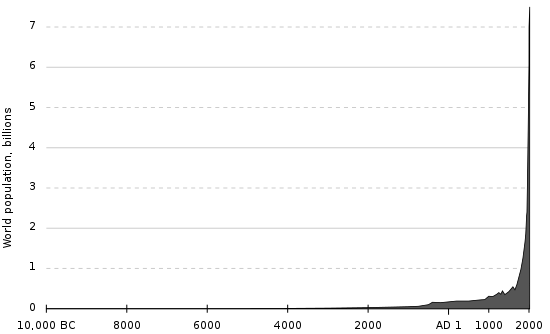
We hit seven billion last week, as per the UN Population Division. Until recently, the world's population was expected to top out at about nine billion and slowly decline. More recent estimates, however, have the population continuing to rise to ten billion and potentially to keep rising (albeit much more slowly) from there.

This is a problem at our present level of development. While we have enough food and water for seven billion people if it were equally distributed, it isn't equally distributed, and it isn't likely to become so in the future. To produce that food and make use of that fresh water, farmers all our the world are using unsustainable practices, from deforestation to overuse of fertilizers and pesticides.

Because of that, even though technology will improve in the future, we don't know if those improvements will keep pace with the degradation of soil, the pollution and depletion of groundwater, the erosion and salinization of coastal lands, the droughts and heat waves of the 21st century. We can reliably expect that, all other things being equal, we will get better at producing food, but meanwhile the physical environment upon which we depend to make food will be becoming significantly more hostile because of our actions. And our food production needs not only to keep pace with these developments, but grow significantly in spite of them.

Of course the savants of WUWT have a simple explanation for all this:
The international socialists see all of this. They figure out: if we can develop an agenda through academia to be followed by the seemingly benevolent, above-the-fray NGOs, then we develop the scholarly agenda of “rights” and “global warming,” then we can feed the govt the science, and tell the govt who to fund to act on the science.

So, the intl socialists have to make up some crises. “Overpopulation,” “reproductive rights,” “global warming,” “pandemic,” etc.
 Yes, just like global warming and disease, overpopulation is a fake problem invented by international socialists to advance their secret agenda via their sinister organs, the NGOs(*).

Concerns about overpopulation are sometimes ad-hom'd to a desire for eugenics or a generally murderous, life-hating outlook:

I maintain that Bonnie Erbe's dopey tribute to Attenborough, "Meanwhile, population explosion ignored" (Courier Times, March 18) reveals "disguised form" eugenics. As Erbe herself notes, "Attenborough points out what I agree with him has become an 'absurd taboo' on speaking out publicly on human population growth and trying to do something about it."
. . .
Erbe parrots Attenborough's hateful bile, which is not even disguised! It would behoove Bonnie Erbe and Sir David to step out of their limos and visit a library.
They would benefit by opening a book once in a while, as there have been many notable ones - AFTER Rachel Carson's Silent Spring.
The logic here (and I use the term loosely) seems to be that if you like people, you want more people, and if you don't want more people, you hate people and you want them to die. The concept that people are nifty but that too many of them could get in each other's way is too subtle, it would seem.

A global population of ten billion people is concerning. Much like what we are doing to the planet's climate at the same time, ten billion humans represent a condition which our civilization has never seen (see the graph above). If they generated greenhouse gases at the same rate per capita as people today, you're talking about a 42% increase in greenhouse gas emissions, at the same time you have a 42% increase in the calories we need to sustain that population. At before you start tilling new fields to feed them, you may want to consider where three Chinas worth of people are going to live.

Since we need more housing and more food, you may want to cut down some forests. Before you do, however, you'd be well advised to read some of the recent literature on terrestrial carbon sinks: "An analysis of inventory data from across the globe suggests that temperate and boreal forests accounted for the majority of the terrestrial carbon sink over the past two decades."

The more people we have, the more difficult it will be to reverse course on greenhouse gas emissions. This is doubly so because many of those new people are going to be born in Sub-Saharan Africa, already the poorest region of the world, and the region expected to experience the most dramatic warming outside the polar regions:

Still, one can make a case that we will be able to cope with overpopulation:
For more than 40 years, climaxing around the first Earth Day, the public has been bombarded with apocalyptic tales of disaster regarding population growth. Paul Ehrlich, for example, a Stanford professor, prominent prophet of population doom and contributor to this op-ed article, predicted in his 1968 bestseller "The Population Bomb" that millions of people would die of starvation during the 1970s because the Earth's inhabitants would multiply at a faster rate than the world's ability to supply food. Six years later, in "The End of Affluence," a book he co-authored with his wife, Anne Ehrlich, the death toll estimates increased to a billion dying from starvation by the mid-1980s. By 1985, Ehrlich predicted, the world would enter a genuine era of scarcity. 
Paul Ehrlich's predicted famines never materialized. While too many people remain hungry, agricultural advances have fought off massive famines. Even as the world's population doubled, per-capita food consumption in poor countries increased from 1,932 calories a day in 1961 to 2,650 in 1998, and malnutrition in those countries fell from 45% of the population in 1949 to about 18%. Furthermore, fertility rates dropped from about five children per woman in the 1960s to about 2.5 today.
 I like how the author drops in that bit about falling fertility -- hey, overpopulation isn't a problem, and anyway, birth rates are falling.

Of course part of the reason birth rates are falling is that some governments, like China's, have actively sought to slow population growth, while other have benefited from rapidly falling birthrates as their people became wealthier and more educated. The collapse of the Soviet Union also led to plummeting birth rates in that part of the world.

It's always going to be possible, in retrospect, to identify wildly overstated or otherwise inaccurate predictions, but we shouldn't conclude, without evidence, that those predictions were universal or  even typical. The same author who fillets Ehrlich toss in this old canard:
[C]oncerns about climate change have shifted from cooling to warming since the 1970s.
Hopefully everyone knows that myth has been repeatedly debunked. Which reminds us to be cautious when someone pulls out an old, inaccurate prediction and asks us to make a number of leaps:

1. That the prediction is being fairly represented.
2. That reality is not different because the warning was heeded (many anti-science folks try to gin up outrage about the "acid rain scare" ignoring the fact that the threat didn't materialize because effective action was taken to mitigate and then reverse the damage.)
3. That the prediction is typical of predictions made at the time.
4. That "those people" making predictions then are similar/the same to "those people" making predictions now (and hence their failures "then" speak to their credibility "now").

That said, I think the author has a point. The green movement does have a history of saying intemperate things. The modern green movement has been largely supported and championed by the left (something of which the left can be proud), and the left has a long history of underestimating the adaptive power of capitalism. Hence leftists of many stripes, from Karl Marx on down, have imagined capitalism collapsing under the weight of its own contradictions in a terrible and glorious smash-up.

That is not going to happen, and those of us who acknowledge the problem of global warming, and the related problem of overpopulation, should make it as clear as possible that that is not our goal. The goal is to use the tremendous productive, inventive and adaptive power of capitalism, not hobble it. This requires a system in which democracy guides money a little bit, rather than money leading democracy by the nose. Markets are a powerful creation, but they are a creation, and they are an expression of human law, not natural law. So to work effectively they need a certain amount of regulation. The pursuit of the individual good will often contribute to the social good, but there are important exceptions. The right-wing climate denial movement would like to equate regulation with central planning and central planning with totalitarianism. Those working to move society towards coping with global warming should not help them by making global warming a proxy fight over the virtues or the sins of a market economy.


* The hostility right-wingers feel towards non-governmental organizations is quite interesting from a philosophical perspective. You'd think that something with "non-governmental" right in the name would appeal to them. The whole "small government" thing assumes that once we "starve the beast" all sorts of voluntary non-governmental organizations will spring up to vaccinate children, clean sewage, sponsor libraries and and provide free education. Private charity is thought to be ready to replace collective action in public good decided upon by our elected representatives.

Yet people actually self-organizing to do good outside the government model are reviled. Corporations are the only nongovernmental organizations of which they approve. Could it be that what they really want is a tyranny of money over people?

Sunday, September 18, 2011

Solyndra "scandal": Explaining the free market to right-wingers


Solyndra, a solar manufacturer, has filed for bankruptcy. This has led to much weeping and gnashing of teeth, as for example:


Fast forward two-and-a-half-years and the chickens have come home to roost. The poster child has shut its doors. 1,100 people are now out of work. Some of them may never recover from this disruption to their economic lives. Those who left other jobs in order to participate in the president’s vision of the future may lose their homes.
Welcome to the green dream.
The concern trolls have come out in force for the occasion:
One failed solar company does not mean the entire clean energy industry is doomed.At least that is what John Doerr, one of Silicon Valley's most prominent venture capitalists, is telling himself and anyone who will listen . . .
Peter Thiel, PayPal founder, is ready to declare the entire industry dead:

“Cleantech is an increasingly large disaster that people in Silicon Valley aren’t even talking about any more,” Thiel said. “The failure in energy and transportation points to a larger failure in clean energy . . .
Of course he is also the guy whose extreme right-wing ideology led him to conclude that "Freedom and democracy are [no longer] compatible."


Grown-ups may be wondering what it is about Solyndra that has the right freaking out, and how they can talk unfortunate Republican friends down off the ledge. To help, I've prepared the following brief script as a guide:

Explaining the free market to right-wingers

Hello, champ. Why so glum?

I know. Solynda went out of business -- all those people are out of work! People who invested their money may not get it back! It's hard to understand how something bad like this could happen. We want to know why. Is solar energy bad? 

Even though we have a lot of sadness about Solynda, our feelings don't mean that the solar industry is bad, or even that Solynda going out of business is all bad. Solynda went out of business because of something called the "free market." 

In the free market, people buy things they want, and they sell things for whatever people will pay for them. Companies like Solynda are started by people who think they can make something people want to buy. Solynda made very good solar panels that people did want to buy.

But in the "free market," even if you make something good, you can't charge too much money for it, or people won't want to buy it. So people are always looking for new ways to make things for less money, so they can sell them for less and more people will want to buy them. Your clothes, the house you live in, and everything you have is nicer because lots of companies are trying to find the best way to make things for less money.

Solynda went out of business because other people at other companies found out a better way to make solar panels. They could make more of them, for less money, and sell them for less money. Because of that, not enough people wanted to buy Solynda's solar panels, even though they were very nice.

In the free market, even though businesses run out of money and go away, we all benefit as companies get smarter about making good things for less money. Now Solynda will belong to the people who lent them money, and someone else will use their way of making good solar panels and try to find a way to make it less expensive.

I know this is extra confusing because the government lent Solynda some money. If the government liked them, how can they go out of business? Shouldn't the government have known ahead of time? But in the free market, no one knows for sure what businesses will make money and which ones will go away. It is a mystery. If the government always knew which businesses were the best, we wouldn't need the free market to find the best ones!

Some people say maybe we shouldn't lend the solar companies money. We can decide that for ourselves, because of democracy (we can talk about democracy another time). But for many years we have been helping all kinds of energy companies borrow money, not just solar panel companies but oil, gas, coal and nuclear companies. Some of them go out of business too; that office with the funny name like a television station (the CBO, very good!) thinks half of the money we are lending to nuclear power companies won't get paid back, just like Solynda, except that nuclear power companies get a lot more money.

Maybe we shouldn't help any energy companies get money, but whether we do or we don't, some will make money and get bigger, and some will go out of business, because of the free market. The free market is for everything, not just solar panels, and all kinds of businesses run out of money and go away, not just solar panel companies. When that happens, remember that it doesn't mean that the product is bad and no one liked it. It probably means, like with Solynda, that somebody found a way to make the product for less money to sell more of it. And that is a very good thing, for solar panels and for us, not a bad thing.


Thursday, October 14, 2010

Denialism and racist hate -- the chocolate and peanut butter of teabagger Steven Milloy


Steven Milloy's Junkscience.com is the usual bland denialist gruel of lies and whining, but a more-than-usually odious screed deserves to be underlined:

Yesterday, the APS has answered to Dr Hal Lewis in a way that I consider breathtakingly arrogant and dishonest.

First of all, the answer to the important letter by a serious scientist was apparently composed by a secretary, a black female bureaucrat called Tawanda Johnson. Or is it a coincidence that she is signed under the reply and that the quality of the text suggests that indeed, no scientist was involved?


Wow. Just wow. You think he's done? He's not close to done:


Needless to say, she has no clue about science or research and it is self-evident that she is employed just and purely for the money.

After all, the record shows that she has never cared about anything linked to the scientific truth in her life. Her knowledge of physics is closer to the knowledge of an average dog than the knowledge of Dr Hal Lewis . . .


That's right; not only is it "breathtakingly arrogant" for a "black female" to be addressing the now-great Hal Lewis, but Milloy troubles to tell us that in her understanding she comparable to "an average dog."

His own readers are squeamish at this bigoted turn, but Milloy wants us to know he's the real victim here:

Please try to understand that I, my ancestors, or my nation, for that matter, have never held any slaves or anything of the kind. We've been mostly suppressed. Although it wasn't that bad, the suppression wasn't too different from that of other (often colored) nations from colonies and similar places, so if some people with English or other "imperial" ancestors play their games to regulate their feeling of guilt, could they please kindly notice that despite my or my countrymates' [sic] skin color, I/we have no feeling of guilt and no reason to participate in such a dumb game?


Please note, Steve, no one expects a racist piece of shit like you to feel guilt at your actions. Anybody with the slightest bit of sense can see that you lack the moral sense, to borrow a phrase, of the average dog.

CORRECTION; Via a helpful commenter:

Shouldn't Lubos Motl get the 'credit' for the original statements, per your link?

And Steven Milloy the 'credit' for passing it all on?


Yes.