Showing posts with label solar power. Show all posts

Saturday, February 22, 2014

Distributed energy storage

Tom Murphy thinks energy storage for a mostly solar- and wind-powered grid would be impractically large: 
Putting the pieces together, our national battery occupies a volume of 4.4 billion cubic meters, equivalent to a cube 1.6 km (one mile) on a side. The size in itself is not a problem: we’d naturally break up the battery and distribute it around the country. This battery would demand 5 trillion kg (5 billion tons) of lead.
 The figures he uses to get there:
Let’s also plan ahead and have all of our country’s energy needs met by this system: transportation, heating, industry, etc. The rate at which we currently use energy in all forms in the U.S. is 3 TW. If we transition everything to electricity, we can get by with 2 TW, assuming no growth in demand. Why? Because we currently use two-thirds of our energy supply (or 2 TW) to run heat engines, getting only about 0.6 TW out for useful purposes in the bargain. An electrical system could deliver this same 0.6 TW for only 1 TW of input, considering storage and transmission efficiencies.
Running a 2 TW electrified country for 7 days requires 336 billion kWh of storage.  We could also use nuclear power as a baseload to offset a significant portion of the need for storage—perhaps chopping the need in two. This post deals with the narrower topic of what it would take to implement a full-scale renewable-energy battery. Scale the result as you see fit.
This raises the question, if you have converted all transportation to run on electricity, how much of the storage requirement can be met by those batteries alone?

There are 254.4 million registered passenger vehicles in the United States. There are also several million commercial trucks and bus that are significantly larger than your average passenger vehicle. I'm going to count them as several "passenger-vehicle equivalents" and round that number to 300 million. Assume they are driven about 4 hours a day, and otherwise available to the grid, and give each one of Tesla's 85kWh batteries:

85 * (3*10^9) * (5/6) = 21.25 billion kWh.

So you could meet about 7% of the week's worth of power Mr. (Dr.?) Murphy estimates we might need (there's no point in being falsely precise in an exercise like this.) However the numbers look better if we make the scenario a little more realistic; for example, if we presume about 40% of the normal load will be baseload power -- about what a smart grid is thought to require to be stable. We can meet this through a combination of hydro, geothermal, nuclear, tidal, and/or space-based solar.

We should also suppose a dynamic pricing model for electricity, something the UK is already experimenting with. When solar are wind farms are idle, power costs more, reducing consumption. It seems likely that you could reduce energy consumption by a fair amount by this method -- 35% perhaps.

Now, in our nightmare scenario of unending darkness and perfectly becalmed winds, we have 35% of demand met by conservation, 40% by baseload power, leaving 25% to be covered by batteries. That's still more than we have, so let's add some hydroelectric storage.

In investigating the potential of hydroelectric storage -- no mean feat, when existing hydro storage plants tend to be rated by output (MW) not total storage (MW hours) I found myself right back with Tom Murphy:
The U.S. has 78 GW of hydroelectric capacity installed. In a year, these plants produce 272 TWh. Divide by 8766 hours in a year, and we find 0.031 TW (31 GW) of average power. This implies a 40% capacity factor.
In this post he is looking at hydroelectricity's potential as a power source, rather than as a form of storage, but let's borrow the numbers.
When we built things

We can suppose that most of the convenient sites where a large amount of water can flow abruptly downwards are occupied by these sites. We can further presume that if we can control the flow of water downwards, we can also, with the necessary infrastructure, pump the water upwards.

The potential of the dams for storage would reflect the amount of time we could run them at full capacity (78GW) instead of average capacity (31GW) presuming we were using intermittent renewables to "top off" the dam reservoir. Let's say, in the spirit of Fermi estimation, that that time is one week. That would give us a major boost to our storage capacity:

(78GW - 31GW) = 47GW
47GW * 24 hours = 1128 GW-h
1128 GW-h = 1,128,000,000 kW-h * 7 days
7.896 billion kW-h

So that puts us at 29.146 billion kW-h. Note that this is not a hard upper limit; reservoirs can be created artificially near the sea and energy stored via pumped sea water. But that's probably not necessary, because . . .
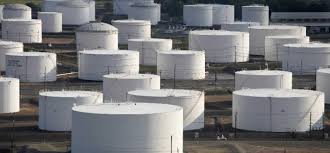
The Strategic Petroleum Reserve has a capacity of 727 million barrels (30.5 billion gallons, 115.4 billion liters). Let's fill that with biodiesel, which has a specific energy of about 35MJ/liter. That would provide a reserve of 115.4 billion * 35MJ = 4 trillion MJ. That's 1.1 trillion kW-h.

Now we have about 16 weeks of stored energy based upon the assumptions above (40% baseload power, 35% drop in consumption secondary to dynamic pricing) or almost four weeks based on Dr Murphy's pessimistic scenario (no adaptive drop in consumption, absolutely no baseload power, not even the 10% of our electrical supply currently provided by hydroelectric dams.

That's almost excessive, but we can trim it down by using imported sugarcane ethanol from Brazil, to give us one of the cleanest biofuels in the world (remember, we are not using this for everyday consumption, but rather as an emergency reserve, so we can acquire it gradually over time.) Ethanol is a little better than half as energy dense as biodiesel, which still gives us a nice margin under either set of assumptions.

So there you have it. Do we need billions of tons of lead to acquire the infrastructure to store a week's worth of energy? No, in fact we have it already!

Wednesday, January 22, 2014

EU backs off rigid renewable targets

The EU is dialing back on rigid, county-by-country targets for renewable energy:
Tempering its environmental ambitions in the face of harsh economic realities, the European Union on Wednesday proposed an end to binding national targets for renewable energy production while aiming for an overall cut of 40 percent in Europe’s carbon emissions by 2030.

Under the plans, outlined after tough internal negotiations, country-by country targets for renewable energy would be replaced by an overall objective for Europe, which would aim to increase the proportion of its energy provided by renewables to 27 percent.
I think this is a good move, climate-wise. It gets the focus back to GHG emissions rather than mandating a particular route to get there.

The old renewable targets, while expensive, have provided some obvious benefits in maturing these technologies and expanding the renewable energy sector:

Source
Obviously in the long run it is not a natural situation for Spain, population 47 million, to have a tenth of the world's installed solar capacity, or Germany, population 81 million, to have over a third of it. Two-thirds of the world's installed PV (1) is found in just a few countries in the EU; obviously the hard targets played a big role in that. Subsidies have driven innovation and adoption; appropriate infrastructure (a smart grid with an HVDC backbone), utility reform (ultra-local power companies with profits set by law are unlikely to nimbly respond to market incentives) and a realistic carbon price are all that's needed for renewables to truly explode in the US.


--------------------------------------------------------------------

1. In 2010; obviously the situation is changing rapidly.

Friday, August 23, 2013

Space-based solar

Source
 With apologies to Roger Pielke, Jr, the problem in tackling the carbon problem is not a lack of technology. It's the inability of our people and our political system to exploit to harness the technology we have through collective political action.

If our country retained the tiniest bit of the ambition and drive that built the Hoover Dam or the Interstate Highway System, we could rip our way through the assumptions of the fossil fuel era like a Sherman tank through a chain-link fence.

Case in point: space-based solar energy.

Space-based solar requires getting a significant amount of mass into geostationary orbit, coping with the degradation of solar panels in that environment, and getting the power back to earth.

There are many speculative technologies for reaching orbit cheaply -- space elevators, magnetic catapults, laser-ablative propulsion, reusable spaceplanes -- but we are approaching a point at which mature conventional rocket technology can, for the first time, move significant masses into orbit without a cost-prohibitive number of launches.

Mature Heavy Lift Launch Vehicles  offer the promise of cutting the cost to low earth orbit (LEO) from $10,000-$15,000/kg today to perhaps $2,200/kg (the estimated cost of a lift from the new Falcon Heavy, a SpaceX rocket in development).

Once you move your payload into LEO, you need to raise it higher, into geostationary orbit (GEO). Fortunately, once in free fall, more stately and deliberate (low-thrust) transportation can be used, such as, for example, ion thrusters. A "tugboat service" could be set up between LEO and GEO, docking with payloads in LEO and gradually moving them into GEO.

Once in geostationary orbit and deployed, a solar panel enjoys half again the power output available on the ground (144%) and can gather that power for >99% of the time. Hence a square meter in orbit will produce between five and ten times as much electricity as the same solar panel on the ground, and it provides baseload power.

The first problem with reaping this bounty is getting their weight into orbit; the second problem is the life expectancy of the panels (the third is getting the power back to earth, which I'll get to in a minute.) It's the second problem, I think, which is the most tricky.

Researchers have succeeded in creating absurdly thin and light solar cells; most recently, the groundwork has been laid for cells two molecules thick. But the orbital environment has an abundance of hard radiation and a certain amount of atomic oxygen that limits the useful life of solar cells. Here too, though, there has been dramatic progress:

Source
A group at NASA took on the challenge of specing out a space-based solar system. Their report is worth a read. They have creative solutions to some of the problems with a space-based system mentioned above (as well as some I hadn't thought about, like waste heat). For example, they limit the mass of expensive and degradable photovoltaics by using a hybrid solar concentrator-PV model -- in plain English, they use reflectors, which are more lightweight and durable, to direct sunlight at a smaller area of solar panels. One model of the end result looks like this:

The large teacup is the reflector array; the small disk is the PV panels. This concentration-PV hybrid approach is also being tried for earth-based systems, and seems promising.

The PV panels, in this design, are cleverly sandwiched together with microwave emitters, which transmit the power to a receiving station below.

The NASA group estimated a final cost of an industrial-scale system along the lines of the above to be about $90/MWh (see page 9). That's a really low number, comparable to new coal plants:


Some have proposed using disposable, foldable ultralight solar panels; your panel collects energy for ten years, and then you simply roll out another thin layer of PV. The article just cited (see part 8) estimates such a system could offer a "power density" (a standard measure of the mass-to-current ratio of space-based PV) of 1.2kW/kg. Ignoring things like the earthbound receiver ("rectenna"), the cost of the panels, and the LEO-GEO shuttle service (because they will essentially be rounding errors for the total cost) a 1,200GW baseload system (supplying about half the current global electrical demand of 20,000TWh/year, or 40% or so after transmission losses) with a forty-year life expectancy would mass about one million tons and cost about $2.3 trillion dollars to orbit with the Falcon Heavy rocket.

That's a staggering sum of money -- almost exactly what we have spent, so far, on the wars in Iraq and Afghanistan.

Despite the remarkably low ROI from that, we are still the richest, most powerful nation in the world, however little it feels that way. It's not about technology. It's about ambition. It's not about how we solve the problem. Contrary to popular opinion, there are many possible solutions. It's about making the decision to solve the problem and concentrating all our efforts on what has to be done.

Update (Oct 2020): The current cost to LEO via a reusable Falcon rocket is approximately $2,000/kg. Starship promises to bring that number down to $270/kg. The latter number would bring launch costs down to $270 billion. That is roughly a tenth of what we have spent on coronavirus relief in the last nine months alone.

Thursday, March 15, 2012

Nuclear reality check

The Economist muses over the impact of Fukshima and the nuclear big picture:
And if the blow is harder than the previous one, the recipient is less robust than it once was. In liberalised energy markets, building nuclear power plants is no longer a commercially feasible option: they are simply too expensive. Existing reactors can be run very profitably; their capacity can be upgraded and their lives extended. But forecast reductions in the capital costs of new reactors in America and Europe have failed to materialise and construction periods have lengthened. Nobody will now build one without some form of subsidy to finance it or a promise of a favourable deal for selling the electricity. And at the same time as the cost of new nuclear plants has become prohibitive in much of the world, worries about the dark side of nuclear power are resurgent, thanks to what is happening in Iran.
After reading Burton Richer's incredible "Beyond Smoke and Mirrors" (which I hope to formally review pretty soon) I had a rekindled enthusiasm for nuclear energy. The problems of disposal can be greatly mitigated by running fuel through plants twice, albeit at the cost of a greater threat of nuclear proliferation if the stuff goes wandering. The actual threat posed by plant malfunctions to human safety is minimal, far less than that of just the deaths caused by inhaling the smoke from burning oil or coal. Nuclear is readily scalable with many promising technologies on the horizon. But for those hoping for modular reactors or micro reactors or molten sodium reactors or thorium on a white horse, another article in the review points to an important problem, beyond a nervous public or heavy-handed regulation, a problem that I, for one, had failed to consider:
Such homogeneity in a 70-year-old high-technology enterprise is remarkable. Seven decades after the Wright brothers’ first flight there were warplanes that could travel at three times the speed of sound, rockets that could send men to the moon, airliner fleets that carried hundreds of thousands of passengers a day, helicopters that could land on top of skyscrapers. Include unmanned spacecraft, and there really were flights a billion times as long as the Wright brothers’ first and lasting for years. But aircraft were capable of diversity and evolution and could be developed cheaply by small teams of engineers. It is estimated that during the 1920s and 1930s some 100,000 types of aircraft were tried out.

Developing a nuclear reactor, on the other hand, has never been a matter for barnstorming experimentation, partly because of the risks and partly because of the links to the technologies of the bomb.
Wind and solar, not without their disadvantages compared to nuclear power and energy sources, have this great advantage; they are relatively safe and easy to tinker with. There are hundreds if not thousands of designs of solar panels and wind turbines, at every stage of development. You will never be able to build and test 100,000 different types of nuclear energy generation, not if your regulators were raving Randian paleolibertarians. If you don't like the shape of your wind turbine you can radically redesign it and throw it up in the wind and see what it does; will you ever be able to do that with a nuclear reactor? And if not, what can we reasonable expect in the coming decades except that renewable technology will continue to advance and nuclear will be (at best, if the public's fears can be allayed) a bridge technology on the way to a low-carbon future?

Sunday, January 8, 2012

The lonely life of the pan-energist

Florida has good, not great solar potential


I like nuclear energy (the more so since reading Burton Richter's Beyond Smoke and Mirrors), and I like Brave New Climate and their relentless championing of nuclear energy.

When I read articles like "Solar Power in Florida," though, it makes me feel lonely. Because I do not have a power source to champion. I am not a wind-and-solar guy, nor am I with the nuclear-or-bust folks. As long as it doesn't spew carbon into the atmosphere, I really don't care what it is. This not-caring rests on several bedrock principles:

1. There really are no silver bullets to cut emissions and stop climate change. Everybody admits that, but not everybody really believes it. Whether or not you agree with the details of the wedge analysis, it's deeper truth is this: there is no single technology, strategy, or breakthrough that can cut carbon emissions by 80-90% from current levels while sustaining economic growth. But many hands make light work.

2. Nothing is more obvious in the world of energy than that different technologies thrive in different circumstances. Some places are really sunny; some enjoy a nice steady wind; some have plentiful water to cool a great big pile of fissionables. Some places are ideal for large, more efficient plants; some places are way off the grid and only need a smidge of power anyway. There are great geothermal sites in Iceland; there are mighty rivers coursing through the Northwest.

Wind energy potentials


Places like Japan have already picked the low-hanging fruit of efficiency; places like the Eastern United States have a giant source of "free energy" that they can tap any time they want to by choosing sensible measures (higher mileage standards, green building codes, etc.) to implement greater efficiency. 

Japan gets two-and-a-half times the economic output from a ton of CO2

Our energy present is messy; our energy future will be messy too. Often arguments about existing sources or promising future directions get caught up in what technology has the most promise, the greatest scalability, the cheapest implementation. But the reality of energy generation is that the answer to that question will not only depend on technological advances no one can accurately predict, but on who you are, where you are, and what kind of power you need at what times.

3. There is nothing in the political universe that is as important to me as action on climate change. Some people I respect want to yoke climate change to a more general shift in our politics towards greater equality, less consumerism, more respect for the environment and a smaller human footprint. I might agree with George Monibot that the general anti-progressive trend in politics is to be deplored. But that is not the argument. I am for a wedge solutions to climate change, not climate change as a wedge issue. This is about the survival of our civilization. Everything else is secondary. So I have no problem (well, I do have a problem, but I will accept) our remaining a selfish, consumer-driven, greedy and unequal society, to the extent that we can find a way to do that without shooting ourselves in the head. Give me plentiful no-carbon energy and I will happily waste it like a good American and defer the rest of the green agenda for another day. While we don't have that, we need to think about conserving energy and becoming more efficient, and I'm fine with that too. If the no-carbon energy kills birds or generates waste or floods valleys, then I'm for facing those consequences directly and incorporating them into the cost-benefit analysis, without trying to prove that one source is clearly superior and all the others are useless or repugnant. Which you would think would be the default position for everyone but, surprisingly, not so.

COMING SOON: How the hit piece on the potential of solar in Florida misled.

Monday, November 7, 2011

A hundred million batteries for our power grid


The loony right's frequent lament:
So-called green energy often is not very green and cannot possibly serve as a substitute for most fossil fuels. Windmills and solar panels are far more expensive than coal and gas; their production is intermittent, unreliable and largely unstorable [sic].  Because of the physics of the electrical grid, wind and solar can never produce more than about 18 percent of electrical production — at least not until low-cost storage devices are developed.
Technology doesn't stand still; whilst fossil fuel apologists are bemoaning an "intermittency problem" that could really ramp up if we had ten times as much renewable power on the grid as actually exists(*), bright engineers are already installing work-arounds.

From the NYTimes:

As a result, the Bonneville Power Administration, the wholesale supplier to a broad swath of the region, turned this year to a strategy common to regions with hot summers: adjusting volunteers’ home appliances by remote control to balance supply and demand.

When excess supply threatens Bonneville’s grid, an operator in a control room hundreds of miles away will now dial up a volunteer’s water heater, raising the thermostat by 60 more degrees. Ceramic bricks in a nearby electric space heater can be warmed to hundreds of degrees.

The devices then function as thermal batteries, capable of giving back the energy when it is needed. Microchips run both systems, ensuring that tap-water and room temperatures in the home hardly vary.
 I'm guessing the efficiency of the system is not great, especially since they are using "found" materials and not purpose-built components. But even a small amount of energy storage, multiplied by the number of water heaters and home heating systems in the US, could add up to a large reserve of stored power.

On the other end of the spectrum, power companies are experimenting with power storage attached to the site, allowing them to manage surges and lulls in demand.

Of course, a extensive North American backbone of HVDC lines could render such adaptations unnecessary by combining the output of thousands of sources and the averaged demand of tens of millions of customers.

Fearmongering, denial of the possibility of technological progress, disbelief in our capacity to adapt and overcome obstacles -- isn't that kinda the mentality the right likes to accuse "greens" of falling into? I thought they were supposed to be the troubadours of technological optimism and faith in human progress? I'm so confused.


* Current power from wind and solar is about 3.3%


Sunday, September 18, 2011

Solyndra "scandal": Explaining the free market to right-wingers


Solyndra, a solar manufacturer, has filed for bankruptcy. This has led to much weeping and gnashing of teeth, as for example:


Fast forward two-and-a-half-years and the chickens have come home to roost. The poster child has shut its doors. 1,100 people are now out of work. Some of them may never recover from this disruption to their economic lives. Those who left other jobs in order to participate in the president’s vision of the future may lose their homes.
Welcome to the green dream.
The concern trolls have come out in force for the occasion:
One failed solar company does not mean the entire clean energy industry is doomed.At least that is what John Doerr, one of Silicon Valley's most prominent venture capitalists, is telling himself and anyone who will listen . . .
Peter Thiel, PayPal founder, is ready to declare the entire industry dead:

“Cleantech is an increasingly large disaster that people in Silicon Valley aren’t even talking about any more,” Thiel said. “The failure in energy and transportation points to a larger failure in clean energy . . .
Of course he is also the guy whose extreme right-wing ideology led him to conclude that "Freedom and democracy are [no longer] compatible."


Grown-ups may be wondering what it is about Solyndra that has the right freaking out, and how they can talk unfortunate Republican friends down off the ledge. To help, I've prepared the following brief script as a guide:

Explaining the free market to right-wingers

Hello, champ. Why so glum?

I know. Solynda went out of business -- all those people are out of work! People who invested their money may not get it back! It's hard to understand how something bad like this could happen. We want to know why. Is solar energy bad? 

Even though we have a lot of sadness about Solynda, our feelings don't mean that the solar industry is bad, or even that Solynda going out of business is all bad. Solynda went out of business because of something called the "free market." 

In the free market, people buy things they want, and they sell things for whatever people will pay for them. Companies like Solynda are started by people who think they can make something people want to buy. Solynda made very good solar panels that people did want to buy.

But in the "free market," even if you make something good, you can't charge too much money for it, or people won't want to buy it. So people are always looking for new ways to make things for less money, so they can sell them for less and more people will want to buy them. Your clothes, the house you live in, and everything you have is nicer because lots of companies are trying to find the best way to make things for less money.

Solynda went out of business because other people at other companies found out a better way to make solar panels. They could make more of them, for less money, and sell them for less money. Because of that, not enough people wanted to buy Solynda's solar panels, even though they were very nice.

In the free market, even though businesses run out of money and go away, we all benefit as companies get smarter about making good things for less money. Now Solynda will belong to the people who lent them money, and someone else will use their way of making good solar panels and try to find a way to make it less expensive.

I know this is extra confusing because the government lent Solynda some money. If the government liked them, how can they go out of business? Shouldn't the government have known ahead of time? But in the free market, no one knows for sure what businesses will make money and which ones will go away. It is a mystery. If the government always knew which businesses were the best, we wouldn't need the free market to find the best ones!

Some people say maybe we shouldn't lend the solar companies money. We can decide that for ourselves, because of democracy (we can talk about democracy another time). But for many years we have been helping all kinds of energy companies borrow money, not just solar panel companies but oil, gas, coal and nuclear companies. Some of them go out of business too; that office with the funny name like a television station (the CBO, very good!) thinks half of the money we are lending to nuclear power companies won't get paid back, just like Solynda, except that nuclear power companies get a lot more money.

Maybe we shouldn't help any energy companies get money, but whether we do or we don't, some will make money and get bigger, and some will go out of business, because of the free market. The free market is for everything, not just solar panels, and all kinds of businesses run out of money and go away, not just solar panel companies. When that happens, remember that it doesn't mean that the product is bad and no one liked it. It probably means, like with Solynda, that somebody found a way to make the product for less money to sell more of it. And that is a very good thing, for solar panels and for us, not a bad thing.