Tom Murphy thinks energy storage for a mostly solar- and wind-powered grid would be impractically large:
There are 254.4 million registered passenger vehicles in the United States. There are also several million commercial trucks and bus that are significantly larger than your average passenger vehicle. I'm going to count them as several "passenger-vehicle equivalents" and round that number to 300 million. Assume they are driven about 4 hours a day, and otherwise available to the grid, and give each one of Tesla's 85kWh batteries:
85 * (3*10^9) * (5/6) = 21.25 billion kWh.
So you could meet about 7% of the week's worth of power Mr. (Dr.?) Murphy estimates we might need (there's no point in being falsely precise in an exercise like this.) However the numbers look better if we make the scenario a little more realistic; for example, if we presume about 40% of the normal load will be baseload power -- about what a smart grid is thought to require to be stable. We can meet this through a combination of hydro, geothermal, nuclear, tidal, and/or space-based solar.
We should also suppose a dynamic pricing model for electricity, something the UK is already experimenting with. When solar are wind farms are idle, power costs more, reducing consumption. It seems likely that you could reduce energy consumption by a fair amount by this method -- 35% perhaps.
Now, in our nightmare scenario of unending darkness and perfectly becalmed winds, we have 35% of demand met by conservation, 40% by baseload power, leaving 25% to be covered by batteries. That's still more than we have, so let's add some hydroelectric storage.
In investigating the potential of hydroelectric storage -- no mean feat, when existing hydro storage plants tend to be rated by output (MW) not total storage (MW hours) I found myself right back with Tom Murphy:
We can suppose that most of the convenient sites where a large amount of water can flow abruptly downwards are occupied by these sites. We can further presume that if we can control the flow of water downwards, we can also, with the necessary infrastructure, pump the water upwards.
The potential of the dams for storage would reflect the amount of time we could run them at full capacity (78GW) instead of average capacity (31GW) presuming we were using intermittent renewables to "top off" the dam reservoir. Let's say, in the spirit of Fermi estimation, that that time is one week. That would give us a major boost to our storage capacity:
(78GW - 31GW) = 47GW
47GW * 24 hours = 1128 GW-h
1128 GW-h = 1,128,000,000 kW-h * 7 days
7.896 billion kW-h
So that puts us at 29.146 billion kW-h. Note that this is not a hard upper limit; reservoirs can be created artificially near the sea and energy stored via pumped sea water. But that's probably not necessary, because . . .
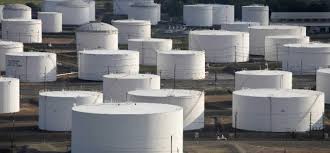 The Strategic Petroleum Reserve has a capacity of 727 million barrels (30.5 billion gallons, 115.4 billion liters). Let's fill that with biodiesel, which has a specific energy of about 35MJ/liter. That would provide a reserve of 115.4 billion * 35MJ = 4 trillion MJ. That's 1.1 trillion kW-h.
Now we have about 16 weeks of stored energy based upon the assumptions above (40% baseload power, 35% drop in consumption secondary to dynamic pricing) or almost four weeks based on Dr Murphy's pessimistic scenario (no adaptive drop in consumption, absolutely no baseload power, not even the 10% of our electrical supply currently provided by hydroelectric dams.
That's almost excessive, but we can trim it down by using imported sugarcane ethanol from Brazil, to give us one of the cleanest biofuels in the world (remember, we are not using this for everyday consumption, but rather as an emergency reserve, so we can acquire it gradually over time.) Ethanol is a little better than half as energy dense as biodiesel, which still gives us a nice margin under either set of assumptions.
So there you have it. Do we need billions of tons of lead to acquire the infrastructure to store a week's worth of energy? No, in fact we have it already!
Putting the pieces together, our national battery occupies a volume of 4.4 billion cubic meters, equivalent to a cube 1.6 km (one mile) on a side. The size in itself is not a problem: we’d naturally break up the battery and distribute it around the country. This battery would demand 5 trillion kg (5 billion tons) of lead.The figures he uses to get there:
Let’s also plan ahead and have all of our country’s energy needs met by this system: transportation, heating, industry, etc. The rate at which we currently use energy in all forms in the U.S. is 3 TW. If we transition everything to electricity, we can get by with 2 TW, assuming no growth in demand. Why? Because we currently use two-thirds of our energy supply (or 2 TW) to run heat engines, getting only about 0.6 TW out for useful purposes in the bargain. An electrical system could deliver this same 0.6 TW for only 1 TW of input, considering storage and transmission efficiencies.
Running a 2 TW electrified country for 7 days requires 336 billion kWh of storage. We could also use nuclear power as a baseload to offset a significant portion of the need for storage—perhaps chopping the need in two. This post deals with the narrower topic of what it would take to implement a full-scale renewable-energy battery. Scale the result as you see fit.This raises the question, if you have converted all transportation to run on electricity, how much of the storage requirement can be met by those batteries alone?
There are 254.4 million registered passenger vehicles in the United States. There are also several million commercial trucks and bus that are significantly larger than your average passenger vehicle. I'm going to count them as several "passenger-vehicle equivalents" and round that number to 300 million. Assume they are driven about 4 hours a day, and otherwise available to the grid, and give each one of Tesla's 85kWh batteries:
85 * (3*10^9) * (5/6) = 21.25 billion kWh.
So you could meet about 7% of the week's worth of power Mr. (Dr.?) Murphy estimates we might need (there's no point in being falsely precise in an exercise like this.) However the numbers look better if we make the scenario a little more realistic; for example, if we presume about 40% of the normal load will be baseload power -- about what a smart grid is thought to require to be stable. We can meet this through a combination of hydro, geothermal, nuclear, tidal, and/or space-based solar.
We should also suppose a dynamic pricing model for electricity, something the UK is already experimenting with. When solar are wind farms are idle, power costs more, reducing consumption. It seems likely that you could reduce energy consumption by a fair amount by this method -- 35% perhaps.
Now, in our nightmare scenario of unending darkness and perfectly becalmed winds, we have 35% of demand met by conservation, 40% by baseload power, leaving 25% to be covered by batteries. That's still more than we have, so let's add some hydroelectric storage.
In investigating the potential of hydroelectric storage -- no mean feat, when existing hydro storage plants tend to be rated by output (MW) not total storage (MW hours) I found myself right back with Tom Murphy:
The U.S. has 78 GW of hydroelectric capacity installed. In a year, these plants produce 272 TWh. Divide by 8766 hours in a year, and we find 0.031 TW (31 GW) of average power. This implies a 40% capacity factor.In this post he is looking at hydroelectricity's potential as a power source, rather than as a form of storage, but let's borrow the numbers.
 |
| When we built things |
We can suppose that most of the convenient sites where a large amount of water can flow abruptly downwards are occupied by these sites. We can further presume that if we can control the flow of water downwards, we can also, with the necessary infrastructure, pump the water upwards.
The potential of the dams for storage would reflect the amount of time we could run them at full capacity (78GW) instead of average capacity (31GW) presuming we were using intermittent renewables to "top off" the dam reservoir. Let's say, in the spirit of Fermi estimation, that that time is one week. That would give us a major boost to our storage capacity:
(78GW - 31GW) = 47GW
47GW * 24 hours = 1128 GW-h
1128 GW-h = 1,128,000,000 kW-h * 7 days
7.896 billion kW-h
So that puts us at 29.146 billion kW-h. Note that this is not a hard upper limit; reservoirs can be created artificially near the sea and energy stored via pumped sea water. But that's probably not necessary, because . . .
Now we have about 16 weeks of stored energy based upon the assumptions above (40% baseload power, 35% drop in consumption secondary to dynamic pricing) or almost four weeks based on Dr Murphy's pessimistic scenario (no adaptive drop in consumption, absolutely no baseload power, not even the 10% of our electrical supply currently provided by hydroelectric dams.
That's almost excessive, but we can trim it down by using imported sugarcane ethanol from Brazil, to give us one of the cleanest biofuels in the world (remember, we are not using this for everyday consumption, but rather as an emergency reserve, so we can acquire it gradually over time.) Ethanol is a little better than half as energy dense as biodiesel, which still gives us a nice margin under either set of assumptions.
So there you have it. Do we need billions of tons of lead to acquire the infrastructure to store a week's worth of energy? No, in fact we have it already!

