
Friday, May 23, 2014
GISTEMP: 2nd warmest April in the temperature record

Wednesday, May 7, 2014
Presented without comment: Neil deGrasse Tyson on AGW
[W]e’re dumping carbon dioxide into the atmosphere at a rate the Earth hasn’t seen since the great climate catastrophes of the past, the ones that led to mass extinctions. We just can’t seem to break our addiction to the kinds of fuel that will bring back a climate last seen by the dinosaurs, a climate that will drown our coastal cities and wreak havoc on the environment and our ability to feed ourselves. All the while, the glorious sun pours immaculate free energy down upon us, more than we will ever need. Why can’t we summon the ingenuity and courage of the generations that came before us? The dinosaurs never saw that asteroid coming. What’s our excuse?
-- Neil deGrasse Tyson, Cosmos
h/t Grist
Saturday, April 19, 2014
March GISTEMP: +0.70C

Fourth warmest March in the record. If the sages are right, and an El Nino is coming, there are a hot couple of years headed our way.
Thursday, March 27, 2014
Jar Jar Pielke
 |
| Meesa gonna normalize those costs, boss. |
So Roger has joined Nate Silver over at the new 538, and the reviews are not good.
There's not really much to say about Pielke. He is what he is. His posts are error-ridden, cherry-picked and logically incoherent, which will surprise no one who has read his blog (or his twitter feed.) (Although I wish I had come up with Ryan Cooper's description of Pielke's output: "the Breakthrough Institute program for hippie-punching your way to fame and fortune.")
The real question of the hour is how Nate Silver, who became the intellectual crush of thinking people everywhere by taking a hard-nosed statistical approach to the squishy world of political analysis, has now seemingly embarked on a career, as the poet said, of "peddling freakonomics-lite contrarianism."
I guess we're seeing another example of successful people not understanding why they were successful in the first place, and either totally neglecting the stuff that made them great or overdoing it to the point of nausea.
You can point to Silver's hiring of Pielke as a mistake, but really, why is he making that mistake? There are a number of factors:
A) He does not have expertise in this area himself.
B) It is a lot more time consuming and difficult to become an expert in climate science and policy than, say, the dynamics of running for Congress.
C) He wanted a contrarian take, which he wrongly believes is what people are looking for from 538.
Unlike politics and sports analysis, where contrarianism is easy and fun because they are saturated with sloppy methodology and magical thinking, climate science is populated mostly by an elite group of highly trained specialists, and that makes successful contrarianism much, much harder.
One can imagine how this might be done. You could get someone very, very good at statistics (not Pielke, obviously) and go through important climate papers, and see what shakes out. One of the troubles with that, obviously, is that to all but a select few, that sort of thing is boring as hell.
Or you could do what I do, and what a lot of other much better informed and more witty people do, and be a contrarians to the contrarians. That's far easier. Their mistakes are glaring, their personality disorders, amusing and dramatic. Since many of the worst offenders are public officials and those that are not get a relentless stream of free publicity from the right-wing hate machine, in contrast to the scientists many people know who they are.
But perhaps Nate did not like all the competition in this space, or perhaps he is shy of embarking on a course which, yet again, would enrage reality-phobic conservatives. But for whatever reason, the new 538 is looking like a caricature of the old 538, leaving bewildered former admirers to ask, do you really not see the difference between the great stuff you were doing before, and the shlock you're putting your name to now?
Saturday, March 8, 2014
Solar activity at a ten-year high
 |
| Source |
Monday, March 3, 2014
Pielke Jr applies mathematics to social policy, misunderstands both
Pielke the younger has a strong if not-very-coherent message for anti-growth advocates (such a huge problem these days.) He is on to their tricks:
So, is it mathematically impossible to be against growth in rich countries and for it in poor countries? Let's consider an analogous argument:
Some try to sugar-coat their anti-growth arguments by focusing their attention on the rich world. But with most of the world’s expected growth to occur in the poor parts of the world, such arguments are simply mathematical non sequiturs. The reality is that to be anti-growth today is actually to be anti-growth with respect to poor countries. The fact that very few, if any, anti-growth activists are openly demanding that poor countries remain poor tells us how powerful a force growth is in today’s global politics.So in other words, people who see limits to growth typically focus on rich countries -- countries which are presumably running up against those limits. They do not focus on poor countries, whom everyone realizes need a significant amount of growth (growth which hopefully, in contradistinction to America's recent experience, will not send 95% of its benefits to the richest 1% of the population.)
So, is it mathematically impossible to be against growth in rich countries and for it in poor countries? Let's consider an analogous argument:
Anti-obesity campaigners disguise their anti-nutrition agenda by claiming to focus on people who are unhealthily overweight. Yet the hard fact remains that the majority of rapid weight gain occurs in babies. So the reality of being anti-weight gain today is to favor malnourished babies. The fact that very few, if any anti-obesity campaigners openly advocate starving young children tells us how politically weak (not to mention dishonest) they are.
Saturday, February 22, 2014
Distributed energy storage
Tom Murphy thinks energy storage for a mostly solar- and wind-powered grid would be impractically large:
There are 254.4 million registered passenger vehicles in the United States. There are also several million commercial trucks and bus that are significantly larger than your average passenger vehicle. I'm going to count them as several "passenger-vehicle equivalents" and round that number to 300 million. Assume they are driven about 4 hours a day, and otherwise available to the grid, and give each one of Tesla's 85kWh batteries:
85 * (3*10^9) * (5/6) = 21.25 billion kWh.
So you could meet about 7% of the week's worth of power Mr. (Dr.?) Murphy estimates we might need (there's no point in being falsely precise in an exercise like this.) However the numbers look better if we make the scenario a little more realistic; for example, if we presume about 40% of the normal load will be baseload power -- about what a smart grid is thought to require to be stable. We can meet this through a combination of hydro, geothermal, nuclear, tidal, and/or space-based solar.
We should also suppose a dynamic pricing model for electricity, something the UK is already experimenting with. When solar are wind farms are idle, power costs more, reducing consumption. It seems likely that you could reduce energy consumption by a fair amount by this method -- 35% perhaps.
Now, in our nightmare scenario of unending darkness and perfectly becalmed winds, we have 35% of demand met by conservation, 40% by baseload power, leaving 25% to be covered by batteries. That's still more than we have, so let's add some hydroelectric storage.
In investigating the potential of hydroelectric storage -- no mean feat, when existing hydro storage plants tend to be rated by output (MW) not total storage (MW hours) I found myself right back with Tom Murphy:
We can suppose that most of the convenient sites where a large amount of water can flow abruptly downwards are occupied by these sites. We can further presume that if we can control the flow of water downwards, we can also, with the necessary infrastructure, pump the water upwards.
The potential of the dams for storage would reflect the amount of time we could run them at full capacity (78GW) instead of average capacity (31GW) presuming we were using intermittent renewables to "top off" the dam reservoir. Let's say, in the spirit of Fermi estimation, that that time is one week. That would give us a major boost to our storage capacity:
(78GW - 31GW) = 47GW
47GW * 24 hours = 1128 GW-h
1128 GW-h = 1,128,000,000 kW-h * 7 days
7.896 billion kW-h
So that puts us at 29.146 billion kW-h. Note that this is not a hard upper limit; reservoirs can be created artificially near the sea and energy stored via pumped sea water. But that's probably not necessary, because . . .
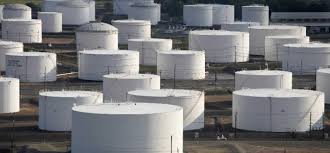 The Strategic Petroleum Reserve has a capacity of 727 million barrels (30.5 billion gallons, 115.4 billion liters). Let's fill that with biodiesel, which has a specific energy of about 35MJ/liter. That would provide a reserve of 115.4 billion * 35MJ = 4 trillion MJ. That's 1.1 trillion kW-h.
Now we have about 16 weeks of stored energy based upon the assumptions above (40% baseload power, 35% drop in consumption secondary to dynamic pricing) or almost four weeks based on Dr Murphy's pessimistic scenario (no adaptive drop in consumption, absolutely no baseload power, not even the 10% of our electrical supply currently provided by hydroelectric dams.
That's almost excessive, but we can trim it down by using imported sugarcane ethanol from Brazil, to give us one of the cleanest biofuels in the world (remember, we are not using this for everyday consumption, but rather as an emergency reserve, so we can acquire it gradually over time.) Ethanol is a little better than half as energy dense as biodiesel, which still gives us a nice margin under either set of assumptions.
So there you have it. Do we need billions of tons of lead to acquire the infrastructure to store a week's worth of energy? No, in fact we have it already!
Putting the pieces together, our national battery occupies a volume of 4.4 billion cubic meters, equivalent to a cube 1.6 km (one mile) on a side. The size in itself is not a problem: we’d naturally break up the battery and distribute it around the country. This battery would demand 5 trillion kg (5 billion tons) of lead.The figures he uses to get there:
Let’s also plan ahead and have all of our country’s energy needs met by this system: transportation, heating, industry, etc. The rate at which we currently use energy in all forms in the U.S. is 3 TW. If we transition everything to electricity, we can get by with 2 TW, assuming no growth in demand. Why? Because we currently use two-thirds of our energy supply (or 2 TW) to run heat engines, getting only about 0.6 TW out for useful purposes in the bargain. An electrical system could deliver this same 0.6 TW for only 1 TW of input, considering storage and transmission efficiencies.
Running a 2 TW electrified country for 7 days requires 336 billion kWh of storage. We could also use nuclear power as a baseload to offset a significant portion of the need for storage—perhaps chopping the need in two. This post deals with the narrower topic of what it would take to implement a full-scale renewable-energy battery. Scale the result as you see fit.This raises the question, if you have converted all transportation to run on electricity, how much of the storage requirement can be met by those batteries alone?
There are 254.4 million registered passenger vehicles in the United States. There are also several million commercial trucks and bus that are significantly larger than your average passenger vehicle. I'm going to count them as several "passenger-vehicle equivalents" and round that number to 300 million. Assume they are driven about 4 hours a day, and otherwise available to the grid, and give each one of Tesla's 85kWh batteries:
85 * (3*10^9) * (5/6) = 21.25 billion kWh.
So you could meet about 7% of the week's worth of power Mr. (Dr.?) Murphy estimates we might need (there's no point in being falsely precise in an exercise like this.) However the numbers look better if we make the scenario a little more realistic; for example, if we presume about 40% of the normal load will be baseload power -- about what a smart grid is thought to require to be stable. We can meet this through a combination of hydro, geothermal, nuclear, tidal, and/or space-based solar.
We should also suppose a dynamic pricing model for electricity, something the UK is already experimenting with. When solar are wind farms are idle, power costs more, reducing consumption. It seems likely that you could reduce energy consumption by a fair amount by this method -- 35% perhaps.
Now, in our nightmare scenario of unending darkness and perfectly becalmed winds, we have 35% of demand met by conservation, 40% by baseload power, leaving 25% to be covered by batteries. That's still more than we have, so let's add some hydroelectric storage.
In investigating the potential of hydroelectric storage -- no mean feat, when existing hydro storage plants tend to be rated by output (MW) not total storage (MW hours) I found myself right back with Tom Murphy:
The U.S. has 78 GW of hydroelectric capacity installed. In a year, these plants produce 272 TWh. Divide by 8766 hours in a year, and we find 0.031 TW (31 GW) of average power. This implies a 40% capacity factor.In this post he is looking at hydroelectricity's potential as a power source, rather than as a form of storage, but let's borrow the numbers.
 |
| When we built things |
We can suppose that most of the convenient sites where a large amount of water can flow abruptly downwards are occupied by these sites. We can further presume that if we can control the flow of water downwards, we can also, with the necessary infrastructure, pump the water upwards.
The potential of the dams for storage would reflect the amount of time we could run them at full capacity (78GW) instead of average capacity (31GW) presuming we were using intermittent renewables to "top off" the dam reservoir. Let's say, in the spirit of Fermi estimation, that that time is one week. That would give us a major boost to our storage capacity:
(78GW - 31GW) = 47GW
47GW * 24 hours = 1128 GW-h
1128 GW-h = 1,128,000,000 kW-h * 7 days
7.896 billion kW-h
So that puts us at 29.146 billion kW-h. Note that this is not a hard upper limit; reservoirs can be created artificially near the sea and energy stored via pumped sea water. But that's probably not necessary, because . . .
Now we have about 16 weeks of stored energy based upon the assumptions above (40% baseload power, 35% drop in consumption secondary to dynamic pricing) or almost four weeks based on Dr Murphy's pessimistic scenario (no adaptive drop in consumption, absolutely no baseload power, not even the 10% of our electrical supply currently provided by hydroelectric dams.
That's almost excessive, but we can trim it down by using imported sugarcane ethanol from Brazil, to give us one of the cleanest biofuels in the world (remember, we are not using this for everyday consumption, but rather as an emergency reserve, so we can acquire it gradually over time.) Ethanol is a little better than half as energy dense as biodiesel, which still gives us a nice margin under either set of assumptions.
So there you have it. Do we need billions of tons of lead to acquire the infrastructure to store a week's worth of energy? No, in fact we have it already!
Subscribe to:
Posts (Atom)