Saturday, February 22, 2014

Distributed energy storage

Tom Murphy thinks energy storage for a mostly solar- and wind-powered grid would be impractically large
Putting the pieces together, our national battery occupies a volume of 4.4 billion cubic meters, equivalent to a cube 1.6 km (one mile) on a side. The size in itself is not a problem: we’d naturally break up the battery and distribute it around the country. This battery would demand 5 trillion kg (5 billion tons) of lead.
 The figures he uses to get there:
Let’s also plan ahead and have all of our country’s energy needs met by this system: transportation, heating, industry, etc. The rate at which we currently use energy in all forms in the U.S. is 3 TW. If we transition everything to electricity, we can get by with 2 TW, assuming no growth in demand. Why? Because we currently use two-thirds of our energy supply (or 2 TW) to run heat engines, getting only about 0.6 TW out for useful purposes in the bargain. An electrical system could deliver this same 0.6 TW for only 1 TW of input, considering storage and transmission efficiencies.
Running a 2 TW electrified country for 7 days requires 336 billion kWh of storage.  We could also use nuclear power as a baseload to offset a significant portion of the need for storage—perhaps chopping the need in two. This post deals with the narrower topic of what it would take to implement a full-scale renewable-energy battery. Scale the result as you see fit.
This raises the question, if you have converted all transportation to run on electricity, how much of the storage requirement can be met by those batteries alone?

There are 254.4 million registered passenger vehicles in the United States. There are also several million commercial trucks and bus that are significantly larger than your average passenger vehicle. I'm going to count them as several "passenger-vehicle equivalents" and round that number to 300 million. Assume they are driven about 4 hours a day, and otherwise available to the grid, and give each one of Tesla's 85kWh batteries:

85 * (3*10^9) * (5/6) = 21.25 billion kWh.

So you could meet about 7% of the week's worth of power Mr. (Dr.?) Murphy estimates we might need (there's no point in being falsely precise in an exercise like this.) However the numbers look better if we make the scenario a little more realistic; for example, if we presume about 40% of the normal load will be baseload power -- about what a smart grid is thought to require to be stable. We can meet this through a combination of hydro, geothermal, nuclear, tidal, and/or space-based solar.

We should also suppose a dynamic pricing model for electricity, something the UK is already experimenting with. When solar are wind farms are idle, power costs more, reducing consumption. It seems likely that you could reduce energy consumption by a fair amount by this method -- 35% perhaps.

Now, in our nightmare scenario of unending darkness and perfectly becalmed winds, we have 35% of demand met by conservation, 40% by baseload power, leaving 25% to be covered by batteries. That's still more than we have, so let's add some hydroelectric storage.

In investigating the potential of hydroelectric storage -- no mean feat, when existing hydro storage plants tend to be rated by output (MW) not total storage (MW hours) I found myself right back with Tom Murphy:
The U.S. has 78 GW of hydroelectric capacity installed. In a year, these plants produce 272 TWh. Divide by 8766 hours in a year, and we find 0.031 TW (31 GW) of average power. This implies a 40% capacity factor.
In this post he is looking at hydroelectricity's potential as a power source, rather than as a form of storage, but let's borrow the numbers.
When we built things

We can suppose that most of the convenient sites where a large amount of water can flow abruptly downwards are occupied by these sites. We can further presume that if we can control the flow of water downwards, we can also, with the necessary infrastructure, pump the water upwards.

The potential of the dams for storage would reflect the amount of time we could run them at full capacity (78GW) instead of average capacity (31GW) presuming we were using intermittent renewables to "top off" the dam reservoir. Let's say, in the spirit of Fermi estimation, that that time is one week. That would give us a major boost to our storage capacity:

(78GW - 31GW) = 47GW
47GW * 24 hours = 1128 GW-h
1128 GW-h = 1,128,000,000 kW-h * 7 days
7.896 billion kW-h

So that puts us at 29.146 billion kW-h. Note that this is not a hard upper limit; reservoirs can be created artificially near the sea and energy stored via pumped sea water. But that's probably not necessary, because . . .
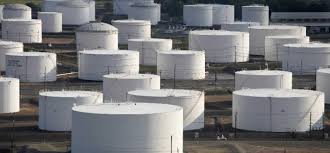
The Strategic Petroleum Reserve has a capacity of 727 million barrels (30.5 billion gallons, 115.4 billion liters). Let's fill that with biodiesel, which has a specific energy of about 35MJ/liter. That would provide a reserve of 115.4 billion * 35MJ = 4 trillion MJ. That's 1.1 trillion kW-h.

Now we have about 16 weeks of stored energy based upon the assumptions above (40% baseload power, 35% drop in consumption secondary to dynamic pricing) or almost four weeks based on Dr Murphy's pessimistic scenario (no adaptive drop in consumption, absolutely no baseload power, not even the 10% of our electrical supply currently provided by hydroelectric dams.

That's almost excessive, but we can trim it down by using imported sugarcane ethanol from Brazil, to give us one of the cleanest biofuels in the world (remember, we are not using this for everyday consumption, but rather as an emergency reserve, so we can acquire it gradually over time.) Ethanol is a little better than half as energy dense as biodiesel, which still gives us a nice margin under either set of assumptions.

So there you have it. Do we need billions of tons of lead to acquire the infrastructure to store a week's worth of energy? No, in fact we have it already!

Tuesday, February 4, 2014

David Keith vs the apocalypse

David Appell highlights this passage from David Keith's new book:
Imagine how effectively the world might collaborate if we discovered a massive asteroid inbound for a 2050 impact. But, this is not what we face. The claim that climate change threatens an imminent catastrophe is an attempt to play a trump car of (seemingly) objective science in order to avoid debate about the trade-offs at the heart of climate policy and about the role that values play in driving each of our personal judgements of the moral weight we accord to competing interests. But climate change is one of many problems, so there is no substitute for realistic assessment of our risks and open debate about the trade-offs between them, for we cannot avoid all risk or solve all problems.

-- David Keith, A Case for Climate Engineering
There's no question that there is a strain of apocalyptic thinking in environmentalism (is there any ideology that does not have some element of this?)  But as so often when you try to ascribe motives to people, Keith does not have this quite right.

Yes, some people picture climate change as an "imminent catastrophe." And depending on your definition of "catastrophe" or "imminent" you could be right by your own lights. But I don't think the appeal of the end-of-the-world thinking is that it short-circuits a debate about "values." The idea that we are having a conflict about values is just wrong, wrong, wrong. So what is the appeal?

In the first place you have to acknowledge the general appeal of extremism in political debates. This has been apparent for thousands of years, ever since there was a need to appeal to large groups of unrelated people using abstract ideas. Go back to the Greece of Thucydides, 2,500 years ago, and you find oligarchs swearing that democracy will lead to economic collapse, famine, incest, and cannibalism, and democrats swearing that oligarchs will crush the life out of the people, steal their money, rape their women, and so forth.

Extremism makes it easy to talk to low-information voters, which has always been a prime need of all political activists. Keith views environmental extremists as cunningly evading a serious and rational weighing of the relative risks and benefits of alternate courses of action. In reality, of course, insofar as shouting calamity from the rooftops is strategic at all, the strategy is to compete with other prophets shouting a different kind of doom from other rooftops.

An Assyrian clay tablet dating to around 2800 B.C. bears the inscription: “Our Earth is degenerate in these later days; there are signs that the world is speedily coming to an end; bribery and corruption are common; children no longer obey their parents; every man wants to write a book and the end of the world is evidently approaching.”[1]


Then, too, there is the even longer tradition of prophecies of doom, predicting an apocalypse that will consume the wicked. This goes right back to the Hebrew Bible and even before that. What appeals about these stories is not that they change the narrative of values -- prophets will have that conversation with you all day, every day, firmly in the belief that they are getting the best of the exchange. It is to reconcile their certainty that their values are correct and that they are in harmony with the universe with all the evidence around them that they have little power and the world is not ordered as it should be. This is the appeal of apocalypse stories to the devout, be they Christians, Muslims, extreme environmentalists, or libertarians (for libertarians, of course, the part of the Beast is played by fiat currency.)

The people who think the world is ending, imminently, should not be confused with the people who think the world is on a bad path, and needs to get on the right one, imminently. The two groups have plenty in common. They don't like large parts of the society we live in. They may dress funny. They may be strident and intolerant of gradualism. But while the former are in retreat from reality, the latter most decidedly are not. They are the Quaker abolitionists smuggling slaves to freedom, the women's suffragettes being dragged off to jail, the marchers on Selma and Washington braving the fire hoses and the dogs. And they are also, very proudly, the scientist arrested fighting mountaintop coal mining and the activist laying down in front of trucks to stop pipelines.

There is the judicious weighing of risks by armchair intellectuals, and there is action by those who have weighed the risks to those that cannot defend or protect themselves and chose to act, according to their own moral code. The latter may or may not succeed in affecting significant change; the former never will.

Wednesday, January 22, 2014

EU backs off rigid renewable targets

The EU is dialing back on rigid, county-by-country targets for renewable energy:
Tempering its environmental ambitions in the face of harsh economic realities, the European Union on Wednesday proposed an end to binding national targets for renewable energy production while aiming for an overall cut of 40 percent in Europe’s carbon emissions by 2030.

Under the plans, outlined after tough internal negotiations, country-by country targets for renewable energy would be replaced by an overall objective for Europe, which would aim to increase the proportion of its energy provided by renewables to 27 percent.
I think this is a good move, climate-wise. It gets the focus back to GHG emissions rather than mandating a particular route to get there.

The old renewable targets, while expensive, have provided some obvious benefits in maturing these technologies and expanding the renewable energy sector:

Source
Obviously in the long run it is not a natural situation for Spain, population 47 million, to have a tenth of the world's installed solar capacity, or Germany, population 81 million, to have over a third of it. Two-thirds of the world's installed PV (1) is found in just a few countries in the EU; obviously the hard targets played a big role in that. Subsidies have driven innovation and adoption; appropriate infrastructure (a smart grid with an HVDC backbone), utility reform (ultra-local power companies with profits set by law are unlikely to nimbly respond to market incentives) and a realistic carbon price are all that's needed for renewables to truly explode in the US.


--------------------------------------------------------------------

1. In 2010; obviously the situation is changing rapidly.

Friday, December 20, 2013

Reddit's science forum bans climate change deniers

But what's really schadenfreudelious is the editor's explanation (h/t Grist):
After some time interacting with the regular denier posters, it became clear that they could not or would not improve their demeanor. These problematic users were not the common “internet trolls” looking to have a little fun upsetting people. Such users are practically the norm on reddit. These people were true believers, blind to the fact that their arguments were hopelessly flawed, the result of cherry-picked data and conspiratorial thinking. They had no idea that the smart-sounding talking points from their preferred climate blog were, even to a casual climate science observer, plainly wrong. They were completely enamored by the emotionally charged and rhetoric-based arguments of pundits on talk radio and Fox News.

Monday, December 16, 2013

Yes, Virgina, there are simple villains in climate change

Andrew Revkin, in his continuing efforts to be the bard of inactivism, wants us to know the climate change is everyone's (and thereby no one's) fault:
We grew up in the twentieth century when everything about the environment was either “woe is me” or “shame on you.” It’s all coming undone, and it’s your fault. That is so antiquated when you look at a problem like climate change, where there’s no whodunit. It’s, ‘We all dunit.’ We’re all using energy. You can punish Exxon, but I still have to fill up my Prius once in awhile and my mini van, which I need because we have two dogs, is not the most efficient vehicle in the world. So whodunit? Me. But the old model was that it had to be someone else’s fault and the other part of the old model was we had to pass a law, which basically means the solution is someone else’s solution. It’s government, a treaty, a law that’ll solve it. Things like climate change are just so much more wicked than the kind of problem you would solve that way. We have to get comfortable with the story when there is no simple villain….
This reminds me of nothing so much as Megyn Kelly's recent rant against evil historical revisionists who question the unquestionable reality that "Santa Claus is just white": 


Prompting Jon Stewart and friends to respond along the lines of "Uh, Megyn? Santa Claus isn't real."

Similarly, it's time the internet had a talk with Mr Revkin and explained to him another of the hard truths of adulthood: simple villains aren't real. Truly, they aren't any more real than Santa Claus. Climate change is no exception to the general rule of life that most big problems implicate a large number of people to a lesser or greater degree.

Whilst the civil rights movement was making simple villains out of Bull Connor and Strom Thurmond, there was endemic racism throughout both South and North. Whites everywhere benefited from employment and housing opportunities denied to blacks and other minorities. To this day Americans continue to benefit from centuries of unpaid labor by black slaves which contributed to our economy, for which reparations have never been made, or even attempted.
You are all me!


Stories of simple villainy exist for the same reason stories about Santa Claus exist: they make people happy. Specifically, they make people happier in undertaking just what Revkin wants them to undertake; reform of a social ill to which many people are a party, which will require short-term sacrifices from a lot of people.

The campaign against Jim Crow is one example of how this can be successful. The campaign against smoking is a still more recent example. Smoking has been steadily losing its grip on the American people over the past fifty years:

Smoking rates in the US over time
The simple villains of the tobacco wars were not the individual smokers (of course) but the tobacco companies who concealed evidence of the health risks of smoking, and waged an aggressive campaign of disinformation to cast doubt on the strong scientific evidence of harm (sound familiar?)

The tobacco companies ended up paying out hundreds of billions of dollars in settlements. But were they the only, or even the primary source of the harm caused by smoking? Certainly not. Farmers had to grow the foul stuff. The government subsidized that growth with taxpayer dollars, which makes it pretty rich, one might argue, for the government to go after the tobacco companies.

Hundreds of thousands of supermarkets, corner stores, bars, smoking shops and other businesses sold (and continue to sell) these death-dealing products, to make money.

Tens of millions of Americans chose to smoke this unhealthy product, to expose other people (most damagingly, their own children) to the smoke, and continued to do so, in many cases, long after their own health had been destroyed.

Did the campaign against tobacco target these people? No it did not. Should it have? Obviously not. As targets they are too numerous, too diffuse, too varied in their level of responsibility, too weak individually to alter the course of the epidemic.

Were the tobacco companies unfairly targeted? No! They lied to the public, lied about the science, and did tremendous damage to the public health in the service of their own bottom lines. Nevertheless, making them the simple villains of the tobacco wars was a political decision by those activists working on the problem -- a very successful one. While waging a rhetorical and later legal war on the tobacco companies, they very successfully encouraged a large portion of Big Tobacco's customers to divest themselves from its product. They convinced legislators to heavily tax cigarettes and heavily restrict where you could smoke them. They did this without making the individual smokers targets. They used their simple villains, the tobacco companies, to cast them as victims.

Revkin speaks dismissively of targeting Exxon as a villain of climate change, or using the kind of legislation used against tobacco companies to restrict the activities of big polluters. But he doesn't actually give any real reason why this won't work. Yes, everyone is implicated in the release of GHGs to some extent. Just as everyone is implicated in structural racism to some extent, or in the labor conditions that produce the cheap plastic products Americans so love, or as tens millions of Americans willing participated (many still do) in the tobacco epidemic. But that is no reason why we cannot identify big, destructive actors profiting hugely and deceiving the public and go after them.

Simple villains are a story, a rhetorical choice. In real life nothing is perfectly simple. But identifying bad guys and going after them can be a spoonful of sugar to help social change go down. Action is easier when there is a villain to target; that is why the government has taken vast amounts of action (much of it ill-considered) against the threat of terrorism, and virtually none against the far more dire threat of climate change. And in the complex tale of our fossil fuel addiction, there's no shortage of serious bad guys begging to be highlighted.

Tuesday, December 10, 2013

The Trouble with Tamsin

Do you trust that face?

During my long and unexplained hiatus -- during which I may or may not have been reforging the sword of my fathers in anticipation of the final confrontation with Steven Goddard -- there was a large amount of buzz about Tamsin Edwards' throwing down the gauntlet and proclaiming that no one in climate science ought to offer any opinion about climate policy.

In the descriptively but unimaginatively titled, "Climate scientists must not advocate particular policies" Edwards lays out her case for abstinence-only public science eduction:
I believe advocacy by climate scientists has damaged trust in the science. We risk our credibility, our reputation for objectivity, if we are not absolutely neutral. At the very least, it leaves us open to criticism. I find much climate scepticism is driven by a belief that environmental activism has influenced how scientists gather and interpret evidence. So I’ve found my hardline approach successful in taking the politics and therefore – pun intended – the heat out of climate science discussions. They call me an “honest broker”, asking for “more Dr. Edwards and fewer zealous advocates”. Crucially, they say this even though my scientific views are absolutely mainstream.
Pace Edwards, scientists who indulge in advocacy can expect to see their reputations trampled in the mud, their credibility shredded, and their careers imploded. Examples are not far to seek. In 1947, for instance, a middle-aged physicist published "Why Socialism?":
[M]ost of the major states of history owed their existence to conquest. The conquering peoples established themselves, legally and economically, as the privileged class of the conquered country. They seized for themselves a monopoly of the land ownership and appointed a priesthood from among their own ranks. The priests, in control of education, made the class division of society into a permanent institution and created a system of values by which the people were thenceforth, to a large extent unconsciously, guided in their social behavior.
There goes his credibility. By the Law of Edwards, he's finto. It's a shame. But for this, I really think that Albert Einstein guy could have made something of himself.

If anyone would like a long list of immortal scientists who argued for particular public policies, I'm happy to provide one, but for the moment let's take that as read and ask why Dr. Edwards has put forward so aggressively an argument that falls apart like tissue paper when applied to real scientists?

Edwards lays out her initial motivation in her first sentence: "As a climate scientist, I’m under pressure to be a political advocate." She doesn't want to be a political advocate. But she obviously feels some defensiveness about this reluctance, or she would simply have said "Fuck off; I'm busy" rather than develop a general theory about why not only should people stop pestering her to take a stand, but that all scientists everywhere should never do so.

Now, if Dr. Edwards had stuck to her own case, and refused to engage in policy debates, her position would be, in my opinion, unassailable. Scientists have an obligation to do good science. They have no obligation to address any question of public policy. If they are reluctant to do so, they had best not do it. No one should bully them into it with expansive doctrines of the scientist's duty to educate. That "duty" has no basis in the traditions of science (1).

But it extrapolating from the personal to the general, Edwards misses the mark. Her argument is threefold:

1) Scientists who advocate for particular policies will lose the public's respect.
2) Scientists who advocate for particular policies will inflame climate deniers (whereas they love and respect Edwards.)
3) Scientists don't know what they are talking about (and anyway, it's all about values and stuff).

The third point I have addressed before. I have little to add, except that I like that post better than when I wrote it, and I think in a small way it contributes to the discourse, in that the nonsense claim that climate change is all about values has a lot of currency on both sides.

The second point is not only thin but somewhat sad:
So I’ve found my hardline approach successful in taking the politics and therefore – pun intended – the heat out of climate science discussions. They call me an “honest broker”, asking for “more Dr. Edwards and fewer zealous advocates”. Crucially, they say this even though my scientific views are absolutely mainstream.
I have no doubt that Edwards is accurately describing how some climate deniers react to her  They are pleased with her, as indeed they should be, because she is not challenging their inactivism in any way. Anyone who knows anything about climate "skeptics" knows that they do not care passionately about the scientific reality, but about the implications of that reality for public policy, so the fact that they like Edwards' stance is utterly predictable. Silent, neutered climate scientists are to deniers almost as good as no climate scientists at all.

Note what Edwards does not say: She does not say any "climate sceptics" have changed their minds about the science. She does not say they have changed their minds about any question of policy. She does not even claim that they accept her "absolutely mainstream" scientific views.

So what is she claiming? Really, only that climate skeptics tolerate her. They don't verbally abuse her. They don't threaten violence against her or her family. They don't sue her, or spam her with FOI requests, or file complaints with her university.

Shorn of sentimentality, this is what Edwards is actually saying: If you refuse to make any connection between your science and public policy, and denounce others who do, climate deniers will spare you the campaign of abuse they inflict upon more dangerous scientists. They may even call you an "honest broker." (No word on whether they call her the Gangster of Love.)

Of course the irony of claiming that title is that Edwards is not an "honest broker." She may be honest, but she can't be a broker, one who "arranges or negotiates (a settlement, deal, or plan)." That is what she has said she will not do, and what climate deniers do not want to do. The irony is thick. Just as many on the right want a government which does not govern, so the climate deniers' ideal "broker" is one who refuses to negotiate a settlement.

Finally we are left with Edwards' claim that scientists who weigh in on matters of policy will lose the public's respect.

This is another place in what Edwards doesn't say is as interesting as what she does. She doesn't say that scientists who advocate policy solutions will lose their objectivity and their science will suffer for it. She is not such a fool. As a working scientist, Edwards knows that scientists working a hypothesis are far from objective. She, like any publishing scientist, could probably list the top ten biases any scientist is fighting to keep at bay upon sitting down at the bench, to wit:

1) I hope this is publishable.
2) I hope my hypothesis is correct.
3) I hope I collected enough data.
4) I hope this work is broadly useful to society.
5) I hope this work shows something substantially different than what my reviewers have read in the last few months.
6) I hope after I publish this it will be easier to get funding.
7) I hope I'm invited to present this at a meeting somewhere nice.

etc. . . .

Edwards, as I said, knows all this, so she doesn't make the claim that you need objectivity to do good science. Instead she claims that scientists need the appearance of objectivity to maintain the respect of the public. Which, if you think about it, reduces to an odd claim: in order to maintain the public's trust, we must all participate in misleading the public about what a scientist is and how science happens.

Because science, in fact, does not depend on objectivity or impartiality. That's why no one cares that Albert Einstein wrote "On Socialism" or that Issac Newton needed a special dispensation of the king to refuse the ordination required of all professors at Trinity College or that Jonas Salk, having invented the polio vaccine, urged its wide adoption.

Science does not require impartial individuals because science can be tested. Science is grounded is data, and the reproduction of results. A baseball umpire or a traffic cop or a federal judge ought to be known for their impartiality, because of the inherent subjectivity of their judgments and the difficulty of revisiting them. Science, ideally, involves careful judgements based upon shared facts and evidence that can be modified or discarded as they are repeatedly reexamined.

Appearing objective, then, is essentially a dodge, a hustle, the opposite of honest. If we are going to try and buttress scientists' respectability by that, we ought to ask Dr Edwards why her blog photo shows neither glasses nor a white coat even though both of those things (2) have been shown to increase the trust of the public in the speaker.

Ultimately I find Edwards position sad. She began with a personal refusal to engage with politics, as is absolutely her right. She extended this to an ill-considered attack on other scientists who made a different choice. Predictably this has led to praise and admiration from the usual suspects who are more than happy to ignore her "mainstream beliefs" (3) and celebrate her rejection of "activism." This praise seems to have turned her head, and only time will tell if she has, as it seems, embarked on the long downward spiral into irrelevance and Curryism.
-------------

1) Compare medicine, where practitioners take an oath "to teach [students] this art; and that by my teaching, I will impart a knowledge of this art to my own sons, and to my teacher's sons, and to disciples bound by an indenture and oath according to the medical laws."

2) Glasses convey the impression the wearer is intelligent and good.
White coats convey the impression the wearer is an authority and is trustworthy.

3) Much like they ignore the multitude of contractions between the various mutually incompatible "skeptic" theories.
